
Line-transect Abundance Estimates of Cetaceans in U.S. Waters around the Hawaiian Islands in 2002, 2010, and 2017.
NOAA technical memorandum NMFS PIFSC. 2021.
115. https://doi.org/10.25923/daz4-kw84
More details
Collapse details
Date Published:
Publication:Ocean:Region:Species:
- January 1, 2021
The Hawaiian Islands Cetacean and Ecosystem Assessment Survey (HICEAS) is a recurring ship-based, line-transect survey designed to estimate cetacean abundance in the entirety of the Hawaiian EEZ.
- Blue whale
- Bryde's whale
- Humpback whale
- Minke whale
- Sei whale
- Blainville's beaked whale
- Bottlenose dolphin
- Goose-beaked whale
- False killer whale
- Fraser's dolphin
- Killer whale
- Longman’s beaked whale
- Melon-headed whale
- Pygmy killer whale
- Risso's dolphin
- Rough-toothed dolphin
- Short-finned pilot whale
- Sperm whale
- Spinner dolphin
- Spotted dolphin
- Striped dolphin
More details
Collapse details
Date Published:
Filesize:
- November 1, 2012
The first phase to integrate the historical sum of these U.S. Navy-sponsored visual survey efforts for marine species monitoring in the HRC was prepared by Uyeyama (2011). This report represents the second phase of that effort and presents an overview of monitoring survey effort to date in the HRC. Available data from visual surveys performed by both contractor-led efforts and U.S. Navy in-house surveys was compiled and processed in order to: 1. Create a geographic information system (GIS)-based summation of all survey tracks that can be easily visualized. 2. Construct a geo-referenced database of sightings that can be queried by species, observer platform, Beaufort Sea State (BSS), season, or other sighting/survey variables. 3. Conduct an enhanced analysis of sighting success with respect to survey platform, field protocol, and environmental conditions. 4. Inform and adjust data collection procedures on future surveys as needed to reflect lessons learned from sighting data compilation efforts presented here. 5. Provide information to enhance informed management of marine protected species in the HRC and support the adaptive management process that is part of the ICM
- 19,704.58 KB
- Hawaiian Monk Seal
- Green turtle
- Bryde's whale
- Humpback whale
- Minke whale
- Sei whale
- Blainville's beaked whale
- Bottlenose dolphin
- Goose-beaked whale
- Fraser's dolphin
- Killer whale
- Longman’s beaked whale
- Melon-headed whale
- Pantropical spotted dolphin
- Pygmy killer whale
- Risso's dolphin
- Rough-toothed dolphin
- Short-finned pilot whale
- Spinner dolphin
- Striped dolphin
More details
Collapse details
Date Published:
Filesize:
- January 1, 2015
Beaked whales (family Ziphiidae) consist of at least 21 different species in six genera with relatively little known about many of the species. Research on this family of odontocetes has increased in the last two decades as a result of a mass stranding event of beaked whales in the Bahamas in 2000 in association with a U.S. Navy training event. Results of this research have identified echolocation click characteristics for several species from different areas of the world based upon both tag data and passive acoustic monitoring data
- 184.39 KB
More details
Collapse details
Date Published:
Filesize:
- March 1, 2022
This report documents Naval Information Warfare Center (NIWC) Pacific marine mammal monitoring efforts in fiscal year (FY) 2021 for Commander, Pacific Fleet (COMPACFLT) at the Pacific Missile Range Facility (PMRF), Kaua‘i, Hawai‘i.
- 8,971.43 KB
More details
Collapse details
Date Published:
Filesize:
- September 1, 2021
This report documents Naval Information Warfare Center Pacific (NIWC Pacific) marine mammal monitoring efforts in fiscal year (FY) 2020 for Commander, Pacific Fleet (COMPACFLT) at the Pacific Missile Range Facility (PMRF), Kauai, Hawaii.
- 5,007.00 KB
More details
Collapse details
Date Published:
Filesize:
- July 1, 2025
This report documents the Naval Information Warfare Center (NIWC) Pacific Whale Acoustic Reconnaissance Project (WARP) Laboratory’s marine mammal monitoring efforts in fiscal year (FY) 2024 for Commander, Pacific Fleet (COMPACFLT) at the Pacific Missile Range Facility (PMRF), Kaua‘i, Hawai‘i.
- 6,328.43 KB
More details
Collapse details
Date Published:
Filesize:
- September 9, 2024
This report documents the Naval Information Warfare Center (NIWC) Pacific Whale Acoustic Reconnaissance Project (WARP) Laboratory’s marine mammal monitoring efforts in fiscal year (FY) 2023 for Commander, Pacific Fleet (COMPACFLT) at the Pacific Missile Range Facility (PMRF), Kaua‘i, Hawai‘i.
- 10,102.05 KB
More details
Collapse details
Date Published:
Filesize:
- August 31, 2011
The goal of this initial phase is to process and compile available data from visual surveys performed by both contractor‐led efforts as well as Navy in‐house ones, such that: 1. A GIS‐based summation of all survey tracks could be visualized 2. A geo‐referenced database of sightings can be queried to visualize sightings by species or survey variables such as observer platform, sea state, or season
- 2,020.33 KB
More details
Collapse details
Date Published:
Filesize:
- February 9, 2025
The University of Hawai‘i Health and Stranding Lab located at Marine Corps Base Hawaii (MCBH) is the only entity in the Pacific Islands region that responds to strandings, conducts necropsy and cause of death investigations, archives tissues and performs research to identify and evaluate threats to Pacific Island cetaceans. This project focuses on increasing our understanding of infectious diseases in the Pacific Island region by investigating the diseases caused by beaked whale circovirus (BWCV), cetacean morbillivirus (CeMV) and toxoplasmosis infections in cetaceans.
- 422.54 KB
More details
Collapse details
Date Published:
Filesize:
- September 9, 2024
We report significant pathological findings from 250 stranding investigations of 20 cetacean species in the Pacific Islands region between 2006 and 2022. Full or partial necropsies of 196 of the 250 stranding cases (78.4%) resulted in a diagnosis or multiple diagnoses associated with death in 126 cases. Natural disease accounted for 60.3% of stranded animals; approximately half were in poor body condition at time of death due to chronic illness. Morbillivirus and Brucella sp. infections caused mortality in eleven species, including striped dolphins and the Longman’s beaked whale. Toxoplasma infection, of anthropogenic cause in Hawaiʻi, led to the deaths of two spinner dolphins. Pygmy and dwarf sperm whales, beaked whales and pilot whales showed heavy parasitism by nematodes, cestodes and trematodes. Approximately 12.7% of stranded individuals were perinates/neonates, with three cases of dystocia with maternal mortality. Anthropogenic trauma was observed in 30.2% of strandings. In seven Cuvier’s beaked whales, cranial and/or microvascular hemorrhages were categorized as trauma. Vertebral and skull fractures were attributed to direct vessel strikes for two pygmy sperm whales, a Cuvier’s beaked whale, a humpback whale calf and a striped dolphin. Blast trauma was observed in three Fraser’s dolphins that were part of an uncommon stranding event. Significant plastic debris, and/or fishery debris were found in stomachs of six species and fatal fishhook penetration occurred in a Submitted in Support of the U.S. Navy’s 2023 Annual Marine Species Monitoring Report for the Pacific STANDARD FORM 298 Back (Rev. 8/98) bottlenose dolphin. This study highlights the value of carcass examinations in a region inhabited by small island associated populations where carcass recovery rates are low, and cetaceans face an array of natural and anthropogenic threats.
- 1,496.52 KB
- Humpback whale
- Blainville's beaked whale
- Bottlenose dolphin
- Goose-beaked whale
- Dwarf sperm whale
- False killer whale
- Fraser's dolphin
- Killer whale
- Longman’s beaked whale
- Melon-headed whale
- Pilot whale
- Pygmy killer whale
- Risso's dolphin
- Rough-toothed dolphin
- Short-finned pilot whale
- Sperm whale
- Spinner dolphin
- Spotted dolphin
- Striped dolphin
More details
Collapse details
Date Published:
Filesize:
- September 26, 2024
Beaked whales are a group of deep diving whales with a world-wide distribution that consists of six genera and 24 identified species. Many species of beaked whales are rarely observed alive at sea and almost all biological data for the most poorly described species is based on stranding events. We examined beaked whale strandings across the western, central and southern Pacific, an area of more than 40 million square kilometers that encompasses island nations and territories in Polynesia, Micronesia and Melanesia. Confirmed strandings of beaked whales include specimens that represent five different species.
- 2,212.83 KB
More details
Collapse details
Date Published:
Filesize:
- November 11, 2024
This review examines historical data from 535 odontocete stranding events in the Mariana archipelago and Hawaiian Islands by date, location and species and spans the time period of 1848 to 2023. Reports of strandings increased across the two geographic regions that were generally consistent over time. A total of 54 historical stranding events that represent 14 odontocete species are described for the Mariana Islands. A total of 481 stranding events that represent 19 odontocete species are described from the Hawaiian Islands, significantly updating the last published report that examined 202 odontocete strandings that occurred in the main Hawaiian Islands between 1937 and 2002. ArcGIS cluster maps were utilized to identify groupings of stranding events across the geographic regions. The majority of strandings in the Mariana Islands were reported from the west and southeastern coast of Guam, followed by Saipan, Rota and Tinian. Stranding hotspots in the Hawaiian Islands were identified at Mā’alaea Bay, Maui, at windward Oʻahu and near Kailua-Kona on Hawaiʻi Island.
- 493.28 KB
More details
Collapse details
Date Published:
Filesize:
- March 14, 2022
The University of Hawaii Health and Stranding Lab located at Marine Corps Base Hawaii (MCBH) is the only entity in the Pacific Islands region that responds to strandings, conducts necropsy and cause of death investigations, archives tissues and performs research to identify and evaluate threats to Pacific Island cetaceans (dolphins, whales, and porpoises).
- 617.84 KB
Complete
Assessment of Marine Mammal Vocal Response to Sonar
Project Objectives
Develop analytic methods to evaluate the vocal response of odontocetes and mysticetes to sonar from navy training activities
Complete
Autonomous Real-Time Passive Acoustic Monitoring of Baleen Whales for Mitigating Interactions with Naval Activities
Project Objectives
Demonstrate near real-time passive acoustic detection and classification hardware/software systems
Current
Mid-Atlantic Nearshore & Mid-shelf Baleen Whale Monitoring
Project Objectives
Assess occurrence, habitat use, and baseline behavior of baleen whales in the mid-Atlantic region
Complete
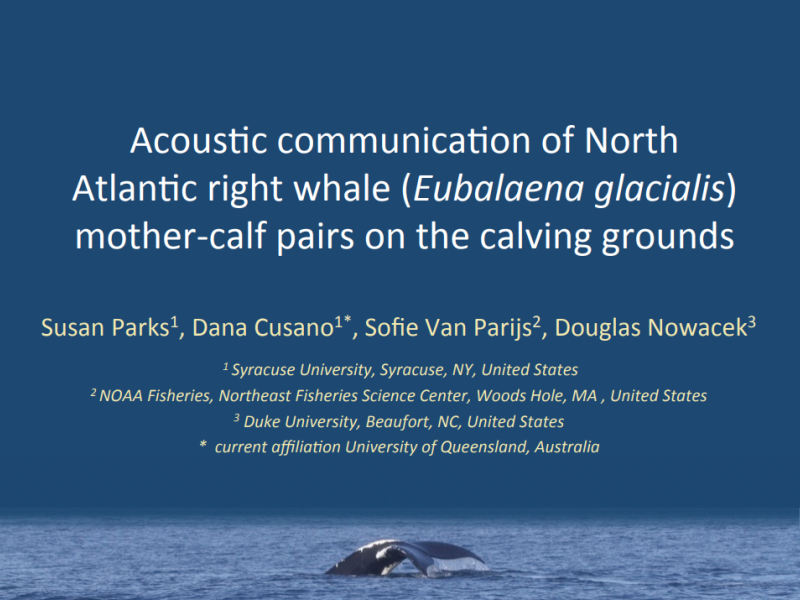
North Atlantic Right Whale Monitoring in the Southeast Calving Area
Project Objectives
Assess behavior of right whales in coastal waters of the Southeast calving grounds, including rates of travel of individuals, dive behavior, and rates of sound production
Current
North Atlantic Right Whale Monitoring, Conservation, and Protection
Project Objectives
Assess occurrence, habitat use, and behavior of North Atlantic right whales in the mid-Atlantic region
Current
Passive Acoustic Monitoring for Mid-Atlantic Baleen Whales
Project Objectives
Monitor large whale occurrence in the Mid-Atlantic
Complete
Passive Acoustic Monitoring for North Atlantic Right Whales off Cape Hatteras, North Carolina
Project Objectives
Investigate the timing of right whale migration through the Mid-Atlantic region, as well as the relative distance from shore and acoustic behavior of migrating whales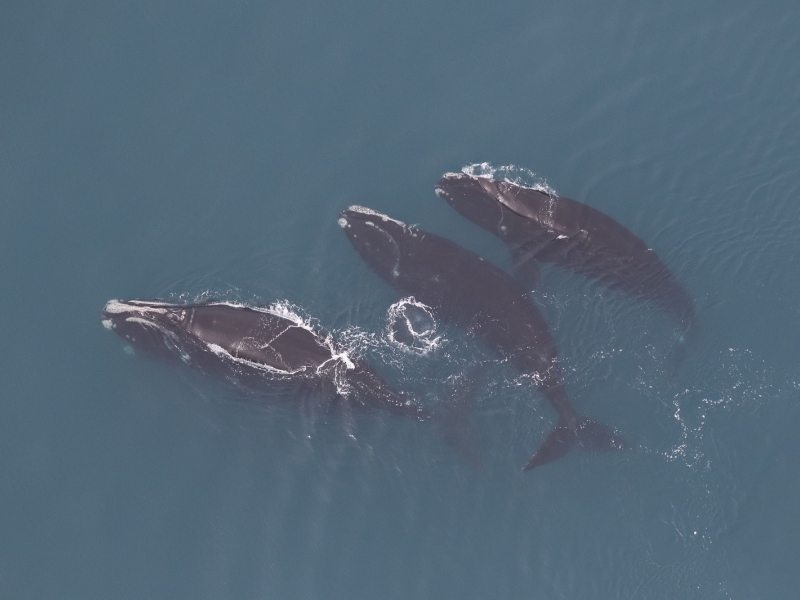
2024-2025 Large Whale Season Summary
March 24, 2025
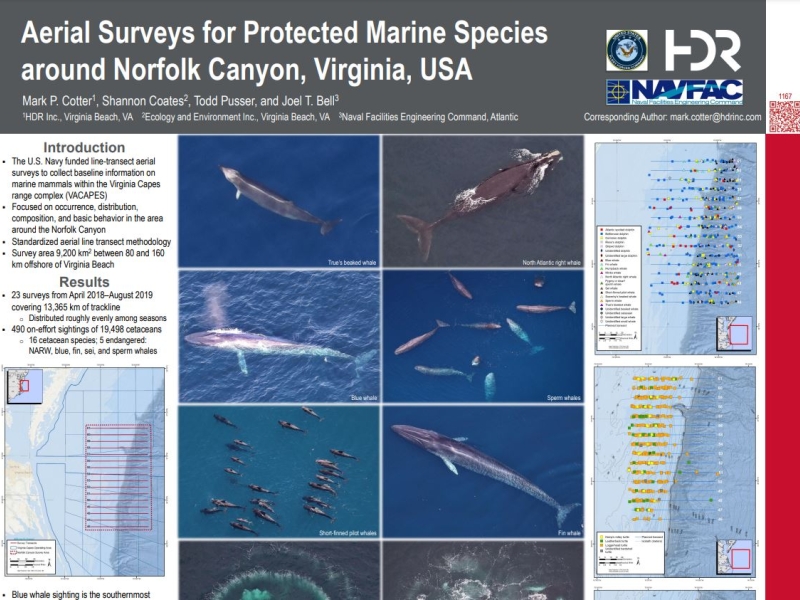
We have two separate efforts focusing on cetaceans off the coast of Virginia. The first is our Offshore (Outer Continental Shelf) Cetacean Study, which focuses primarily on deep diving odontocetes like sperm whales. The second effort is our Nearshore and Mid-Shelf Baleen Whale Monitoring Project.
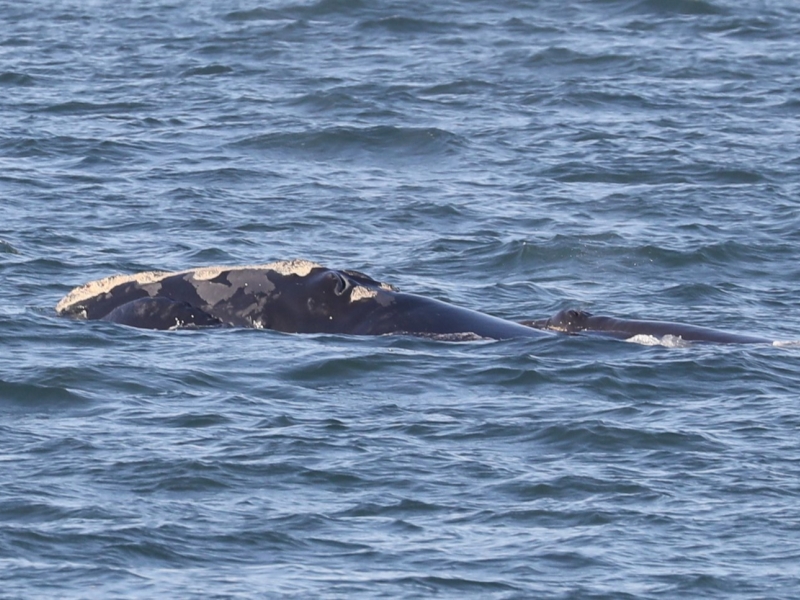
Right whale calf sighted off Virginia!
December 20, 2024
On December 18, 2024, during a survey off Virginia Beach, researchers from HDR Inc. and NAVFAC LANT observed North Atlantic right whale #4540 with her first known calf. This sighting is notable as it's the earliest recorded instance of a newborn right whale calf in Virginia waters, suggesting a possible shift in calving locations northward from the typical areas off Florida and Georgia.
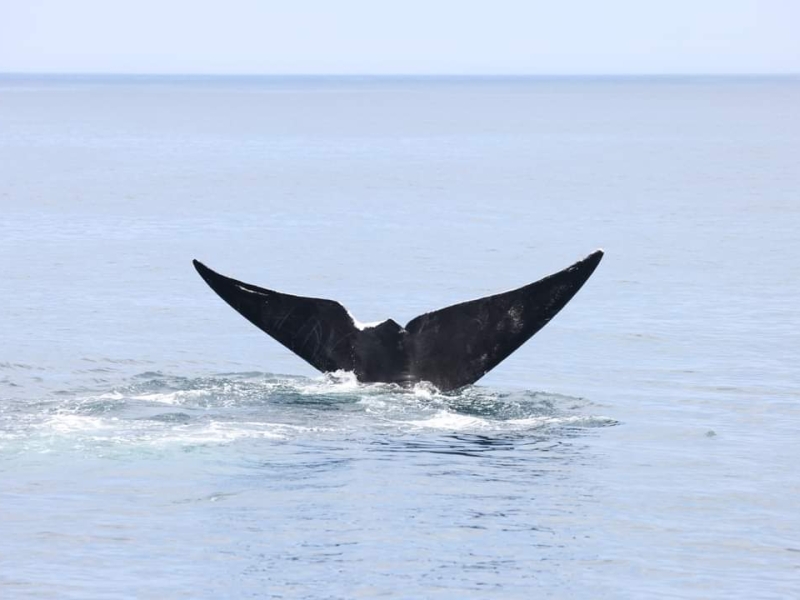
Whales of Summer
June 10, 2024
In the mid-Atlantic, baleen whale sightings typically occur during the colder months, with peak activity in December and January. Sightings of humpback and right whales usually decrease by late March through April. While occasional baleen whale sightings, particularly of fin whales, happen during warmer months, large groups are uncommon as summer approaches. Pelagic surveys during this time often focus on odontocetes like sperm whales and beaked whales.
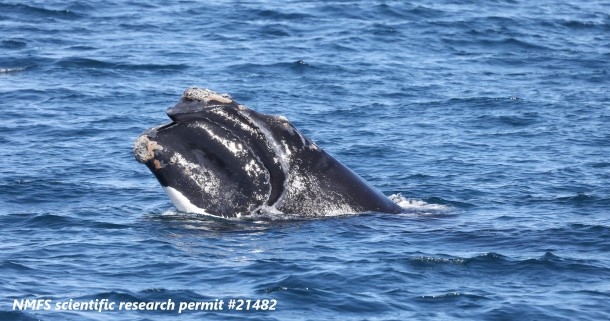
New Right Whale Calf Seen Off Virginia!
June 3, 2024
On Saturday 01 June 2024 during one of our offshore surveys 60 miles southeast of Virginia Beach, we encountered North Atlantic right whale Pico (Catalog #3270) and her calf!
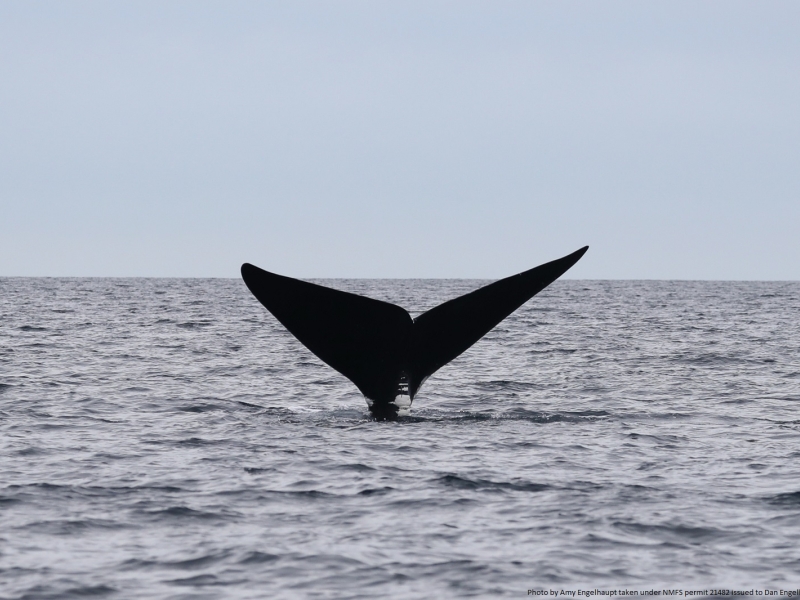
Large Whale Action in the Mid-Atlantic
January 30, 2024
After a relatively slow start to the 2023-2024 large whale season, things are picking up here in the Mid-Atlantic. Last week was the busiest we’ve had so far this season for several of our projects as well as adjacent colleagues.
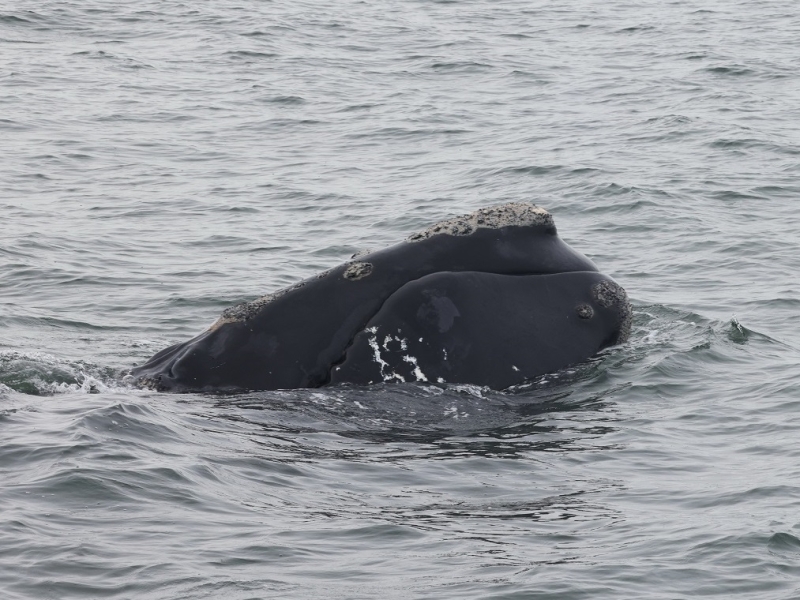
It’s Whale Season in the Mid-Atlantic!
November 20, 2023
Baleen whale season has started in the mid-Atlantic and we have several projects in the region studying their occurrence and behavior.
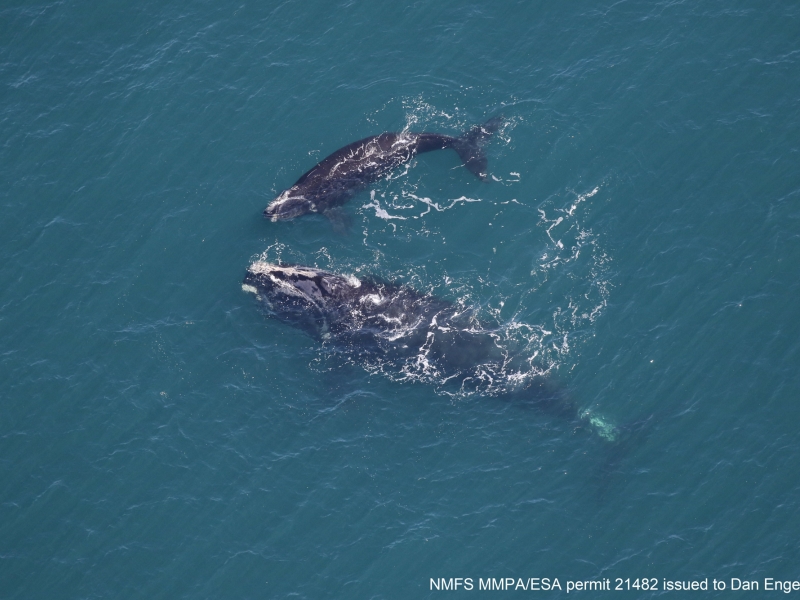
Coming full circle – right whale mom returns with calf
March 15, 2023
Previously CATS tagged Right whale "Smoke" is sighted again in VA with a calf.
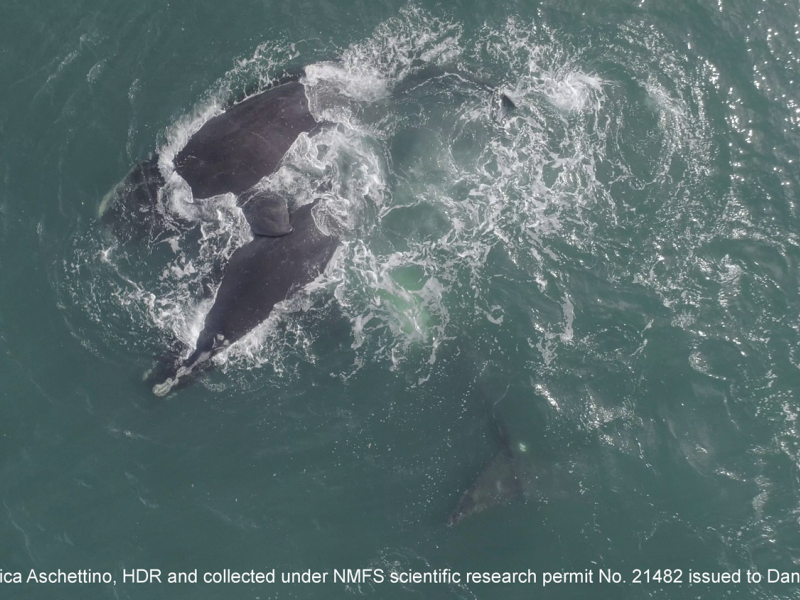
Right Whale Party in the Mid-Atlantic
February 4, 2023
A Surface Active Group of North Atlantic right whales off the coast of Virginia.
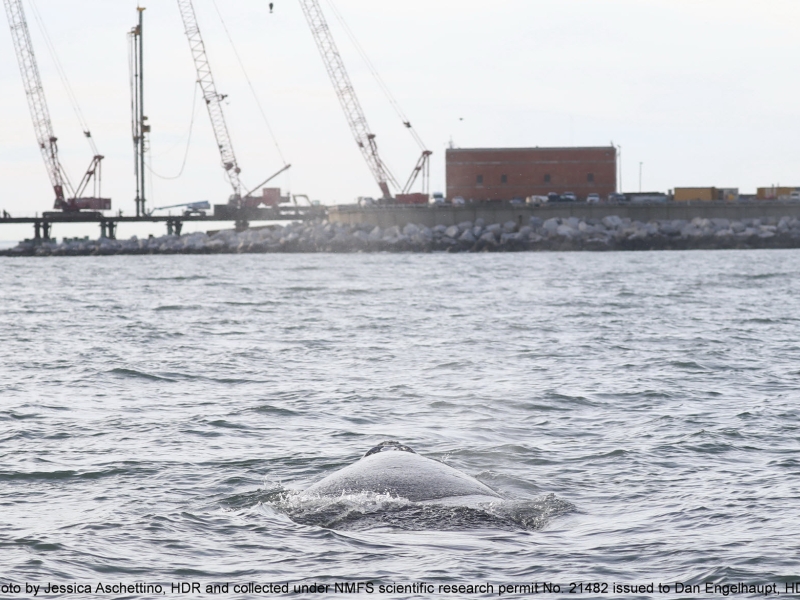
An Urban Whale
February 3, 2023
A juvenile North Atlantic right whale finds itself in a busy area.
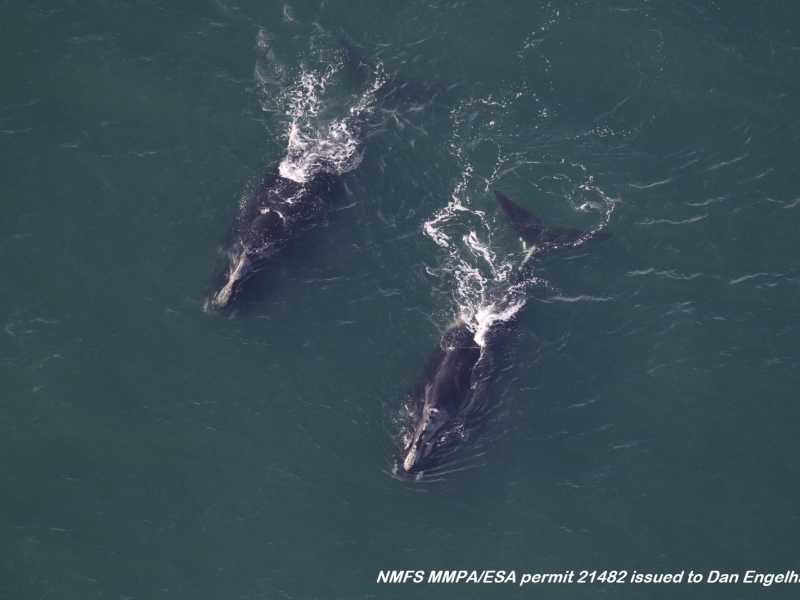
Right whales are on the move!
November 23, 2022
Two female right whales were sighted off Virginia during their southbound migration.
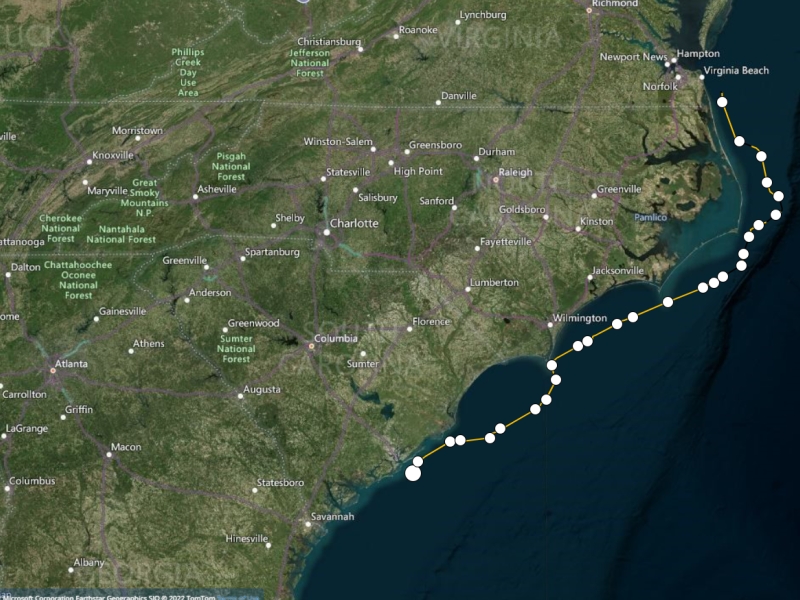
NARW tagged off VA Beach!
March 2, 2022
A yearling right whale was tagged off Virginia.
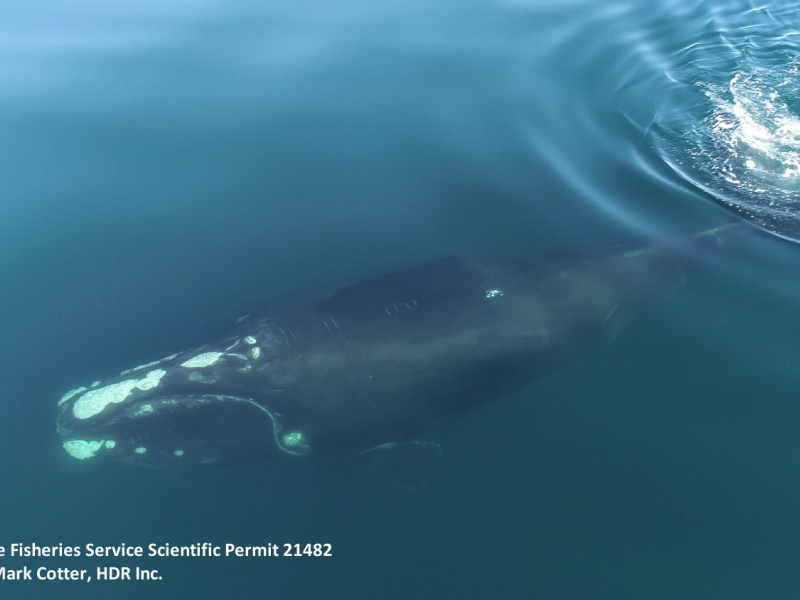
Tracking an endangered North Atlantic right whale
March 15, 2021
A yearling right whale was tagged off the coast of VA and tracked for 12 days.
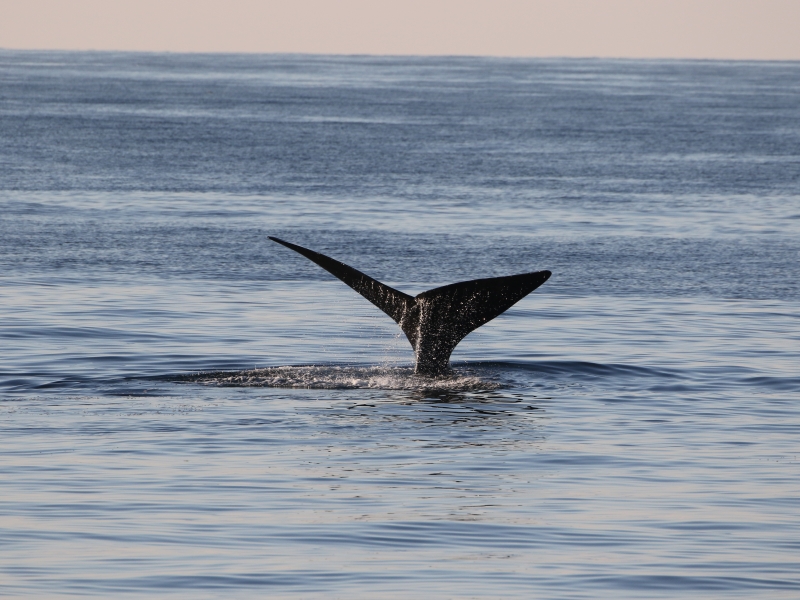
Fantastic video of an encounter with North Atlantic right whales off the coast of Virginia Beach
January 27, 2021
Footage of three right whales off Virginia.
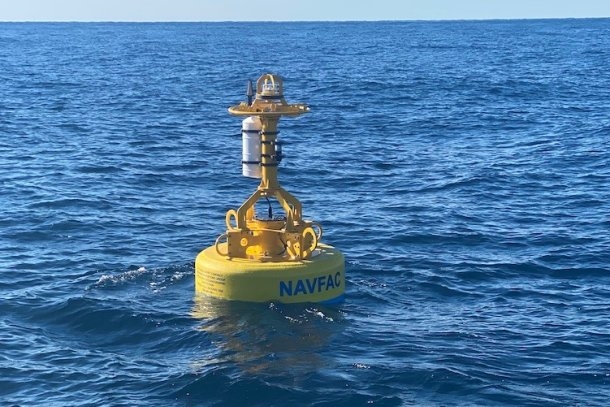
New acoustic monitoring buoy helps researchers study and protect North Atlantic Right Whales
January 19, 2021
A new buoy to listen for protected whales.
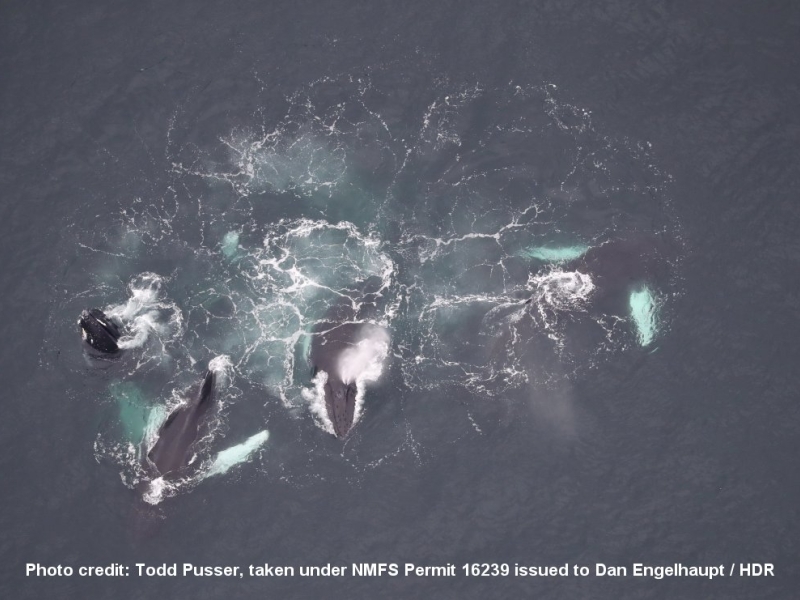
Blue whales and sei whales and right whales - OH MY!!!
April 18, 2018
A spring aggregation of endangered whales offshore.
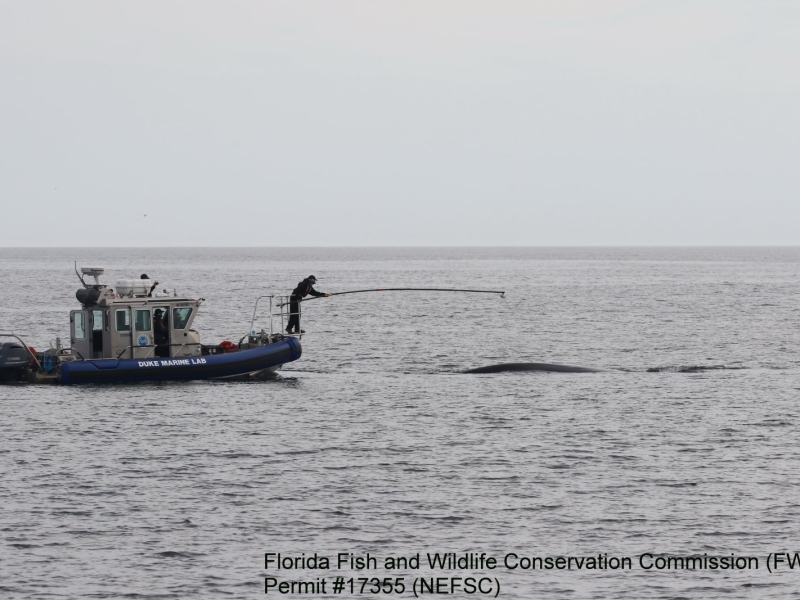
Tagging North Atlantic Right Whales
May 9, 2016
Southeast US tagging project has successful season.
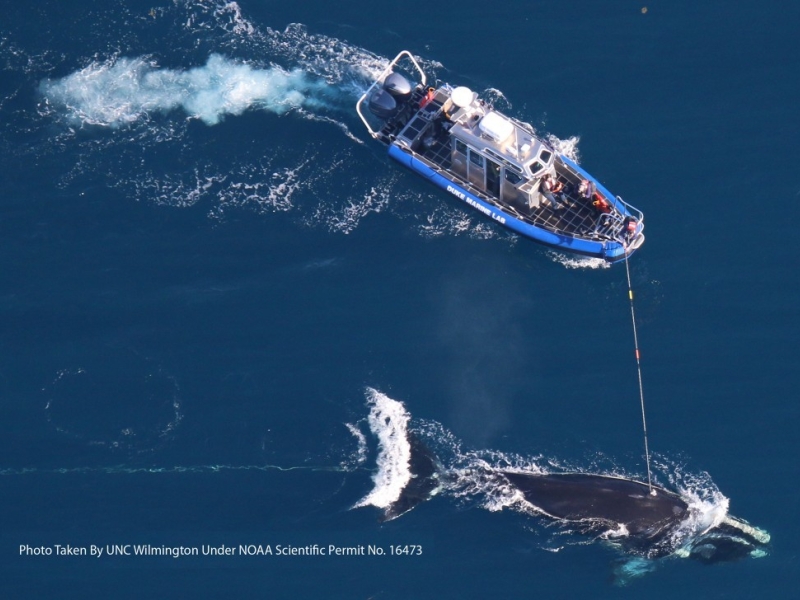
North Atlantic Right Whale Disentanglement
March 3, 2014
Our team provided assistance to a disentanglement effort.
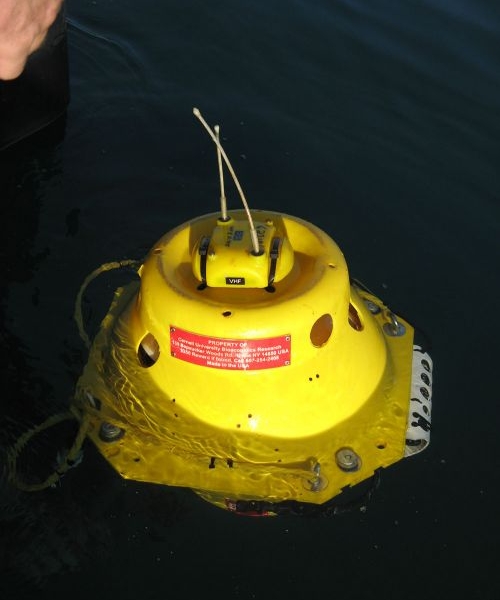
Passive acoustic monitoring for right whales off Cape Hatteras
October 21, 2013
MARUs off NC