
Strengths and weaknesses of using DCLDE algorithms to track baleen whales and examine their behavior using long-term acoustic recordings with a large-scale hydrophone array.
Detection, Classification, Localization, and Density Estimation of Marine Mammals Workshop .
More details
Collapse details
Date Published:
- June 3, 2024
- 502.82 KB
Habitat-based density estimates for cetaceans within the waters of the U.S. Exclusive Economic Zone around the Hawaiian Archipelago.
NOAA technical memorandum NMFS PIFSC. 2021.
110. https://doi.org/10.25923/x9q9-rd73
More details
Collapse details
Date Published:
Publication:Ocean:Region:Species:Methods:
- January 1, 2021
The Hawaiian Islands Cetacean and Ecosystem Assessment Survey (HICEAS) 2017 was conducted in waters within the United States (U.S.) Exclusive Economic Zone (EEZ) around the Hawaiian Archipelago (henceforth “Hawaiian EEZ” for brevity) from 6 July through 1 December 2017 (Yano et al. 2018). The primary objective of this line-transect survey was to collect cetacean sighting data to support the derivation of cetacean density estimates using both design-based analyses and habitat modeling techniques.
Line-transect Abundance Estimates of Cetaceans in U.S. Waters around the Hawaiian Islands in 2002, 2010, and 2017.
NOAA technical memorandum NMFS PIFSC. 2021.
115. https://doi.org/10.25923/daz4-kw84
More details
Collapse details
Date Published:
Publication:Ocean:Region:Species:
- January 1, 2021
The Hawaiian Islands Cetacean and Ecosystem Assessment Survey (HICEAS) is a recurring ship-based, line-transect survey designed to estimate cetacean abundance in the entirety of the Hawaiian EEZ.
- Blue whale
- Bryde's whale
- Humpback whale
- Minke whale
- Sei whale
- Blainville's beaked whale
- Bottlenose dolphin
- Goose-beaked whale
- False killer whale
- Fraser's dolphin
- Killer whale
- Longman’s beaked whale
- Melon-headed whale
- Pygmy killer whale
- Risso's dolphin
- Rough-toothed dolphin
- Short-finned pilot whale
- Sperm whale
- Spinner dolphin
- Spotted dolphin
- Striped dolphin
More details
Collapse details
Date Published:
Filesize:
- September 1, 2016
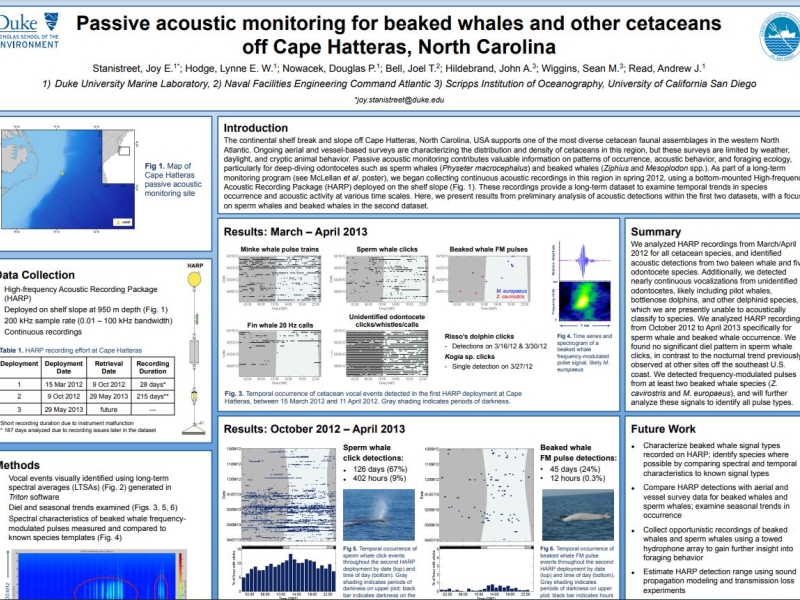
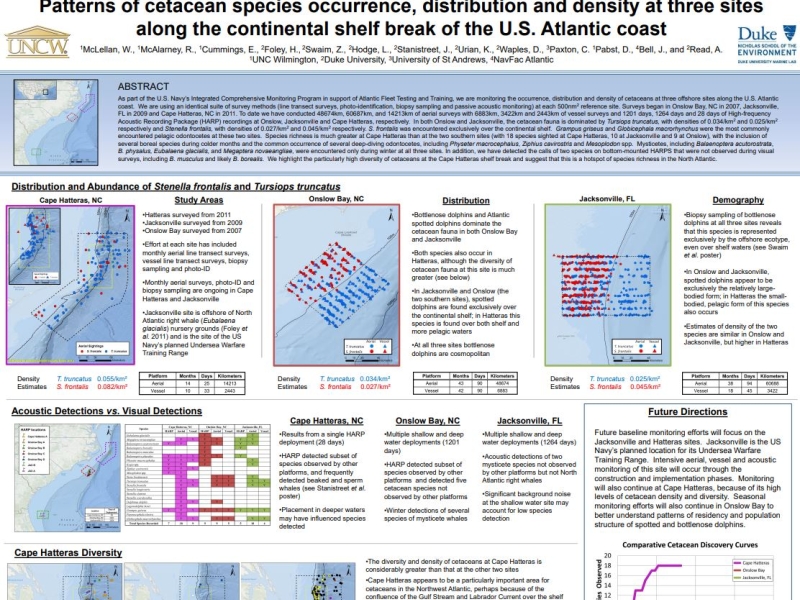
To monitor for the presence of marine mammals, High-frequency Acoustic Recording Packages (HARPs) were deployed at two sites within the Navy’s Virginia Capes Range Complex. There were three deployments at one site, located offshore from Cape Hatteras (HAT), between October 2012 and December 2014. There was one deployment at the other site, located offshore from Norfolk Canyon (NFC), between June 2014 and April 2015. Both sites were located approximately 75 nmi offshore in about 1000 m of water.
- 13,765.01 KB
Passive Acoustic Monitoring for Marine Mammals in the SOCAL Naval Training Area Dec 2012 – Jan 2014.
More details
Collapse details
Date Published:
Filesize:
- January 1, 2015
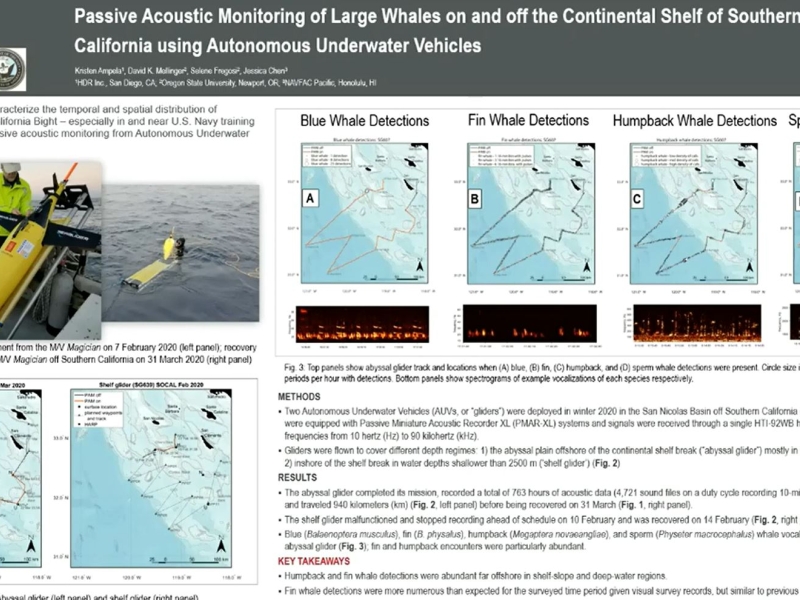
Passive acoustic monitoring was conducted in the Navy’s Southern California Range Complex from December 2012 to January 2014 to detect marine mammal and anthropogenic sounds. High-frequency Acoustic Recording Packages (HARPs) recorded sounds between 10 Hz and 100 kHz at three locations: near Santa Barbara Island (880 m), west of San Clemente Island (1000 m), and southwest of San Clemente Island (1300 m). Six baleen whale species were recorded: blue whales, Bryde’s whales, fin whales, gray whales, humpback whales, and minke whales.
- 21,128.75 KB
More details
Collapse details
Date Published:
Filesize:
- June 17, 2012
This document contains amplifying technical data and information for the United States Department of the Navy’s Southern California Range Complex Comprehensive Monitoring Report.
- 51,916.96 KB
More details
Collapse details
Date Published:
Filesize:
- January 1, 2011
Cetacean distribution and abundance are reported from the first systematic line-transect visual survey in the waters of Guam and the Commonwealth of the Northern Mariana Islands (CNMI). The survey was conducted during January–April 2007 following standard line-transect protocols. Trackline coverage (11,033 km) was dominated by high sea states (88.2%); however, 13 cetacean species were recorded.
- 3,581.88 KB
Distribution and Abundance Estimates for Cetaceans in the Waters of Guam and the Commonwealth of the Northern Mariana Islands.
Pacific Science. 2011.
Vol. 65, no. 3:321 – 343
More details
Collapse details
Date Published:
Publication:Ocean:Region:Species:Methods:
- January 1, 2011
Cetacean distribution and abundance are reported from the first systematic line-transect visual survey in the waters of Guam and the Commonwealth of the Northern Mariana Islands (CNMI). The survey was conducted during January–April 2007 following standard line-transect protocols.
More details
Collapse details
Date Published:
Filesize:
- January 1, 2012
In order to support the U.S. Navy in meeting regulatory requirements for monitoring established under the Final Rules and to provide a mechanism to assist with coordination of program objectives under the ICMP, this survey was conducted to confirm the Marine Mammal Monitoring on Navy Ranges (M3R) acoustic detections and marine mammal satellite tagging was prior to a training event, the Submarine Commander’s Course exercise, which would be conducted in the same area during February 2012.This report presents the methods and preliminary results of a vessel-based visual and acoustic survey effort that was conducted in conjunction with a tagging and species-validation project
- 2,313.85 KB
More details
Collapse details
Date Published:
Filesize:
- August 31, 2012
The overall objective of the ICMP is to assimilate relevant data collected across U.S. Navy range complexes in order to answer questions pertaining to the impact of MFAS and explosives on marine mammals and sea turtles.
- 11,672.29 KB
More details
Collapse details
Date Published:
Filesize:
- September 19, 2024
This report presents a geographic information system (GIS)-based overview of the sighting records obtained during marine species monitoring effort (a total of 12 U.S. Pacific Fleet-funded surveys) to date in the MIRC. Also included are incidental marine mammal and sea turtle sightings made since 1965 on non-dedicated surveys in the region.
- 14,571.64 KB
More details
Collapse details
Date Published:
Filesize:
- November 1, 2012
The first phase to integrate the historical sum of these U.S. Navy-sponsored visual survey efforts for marine species monitoring in the HRC was prepared by Uyeyama (2011). This report represents the second phase of that effort and presents an overview of monitoring survey effort to date in the HRC. Available data from visual surveys performed by both contractor-led efforts and U.S. Navy in-house surveys was compiled and processed in order to: 1. Create a geographic information system (GIS)-based summation of all survey tracks that can be easily visualized. 2. Construct a geo-referenced database of sightings that can be queried by species, observer platform, Beaufort Sea State (BSS), season, or other sighting/survey variables. 3. Conduct an enhanced analysis of sighting success with respect to survey platform, field protocol, and environmental conditions. 4. Inform and adjust data collection procedures on future surveys as needed to reflect lessons learned from sighting data compilation efforts presented here. 5. Provide information to enhance informed management of marine protected species in the HRC and support the adaptive management process that is part of the ICM
- 19,704.58 KB
- Hawaiian Monk Seal
- Green turtle
- Bryde's whale
- Humpback whale
- Minke whale
- Sei whale
- Blainville's beaked whale
- Bottlenose dolphin
- Goose-beaked whale
- Fraser's dolphin
- Killer whale
- Longman’s beaked whale
- Melon-headed whale
- Pantropical spotted dolphin
- Pygmy killer whale
- Risso's dolphin
- Rough-toothed dolphin
- Short-finned pilot whale
- Spinner dolphin
- Striped dolphin
Cue rate and track kinematics of calling Bryde's whales (Balaenoptera brydei) transiting through the U.S. Pacific Missile Range Facility (PRMF).
21st Biennial Conference on the Biology of Marine Mammals .
More details
Collapse details
Date Published:
Filesize:
- December 13, 2015
A Time Difference of Arrival (TDOA) method was used to acoustically localize vocalizing Bryde's whales (Balaenoptera brydei) on the Navy's Pacific Missile Range Facility (PMRF) in Hawaii. Over 130 days of data were recorded from 2011- 2015, resulting in over 12 Bryde's tracks. The tracks were analyzed for cue rates, swim patterns, bearing, directivity, speed, and dive depths. In six of the encounters the Bryde's appear to be traveling in fairly constant headings (typically south-southwest or westerly) crossing the range area over distances ranging from 12 to 27 km over time periods of 1.5 to 6 h with estimated swim speeds up to 12 km/h. Vocalizing whales produced acoustic cues every 3-7 minutes while transiting. Although the occurrence of transiting Bryde's whales is relatively low, the tracks can provide valuable information about the habitat use of this offshore region, particularly because both visual surveys and animal tagging is difficult in this area.
- 91.57 KB
Swim track kinematics and calling behavior attributed to Bryde’s whales on the Navy’s Pacific Missile Range Facility.
Journal of the Acoustical Society of America. 2016.
140:4170-4177
More details
Collapse details
Date Published:
- December 1, 2016
Swimming and acoustic calling behavior attributed to Bryde’s whales in the central North Pacific.
Frontiers in Marine Science. 2024.
11:1305505
More details
Collapse details
Date Published:
Publication:Ocean:Region:Species:Methods:
- April 2, 2024
A unique acoustic call type was identified and attributed to Bryde’s whales in the central North Pacific in 2015, but little is known about the distribution, calling behavior, or swimming behavior of Bryde’s whales in the region. Acoustic detections attributed to Bryde’s whales were used to localize and track individual whales on the U.S. Pacific Missile Range Facility (PMRF) in Kaua‘i, Hawai‘i. This study included 150 acoustically derived tracks from recordings spanning the years 2011–2022 with recording effort in nearly every month. Bryde’s whale movement was examined relative to calendar year, day of year, hour of day, wind speed, and acoustic calling rate. Hidden Markov models were used to identify two kinematic states (slower, less directional movement and faster, more directional movement). The findings indicate that Bryde’s whales were more likely to travel in a faster and more directional state during the daytime than at night and between May and August when compared to other times of year. The along-track acoustic cue rate was examined for 118 tracks, and the findings indicate a possible lengthening of the median inter-call interval over the duration of the study period. These results are an important first step in understanding more about behavior in Bryde’s whales, a relatively under-studied species.
Navy Living Marine Resources Meeting, Santa Barbara, California. November 2023. .
More details
Collapse details
More details
Collapse details
Date Published:
Filesize:
- April 1, 2022
An expedition was conducted with the goal of visually locating, acoustically recording, and obtaining biopsy samples of the Mesoplodon beaked whales that were encountered in 2020 and produce BWB pulses, as well as locating the beaked whales that produce the BW43 echolocation pulse in order to conclusively determine what species produce each of the pulse types.
- 1,398.13 KB
More details
Collapse details
Date Published:
Filesize:
- July 1, 2025
Beaked whales (Family Ziphiidae; Order Cetacea) are the least well-described group of marine mammals because they conduct very long deep dives, spend little time on the surface where they display cryptic behavior, and are difficult to identify due to the similarity between species. Beaked whales are also known to be susceptible to high-energy sound sources in the ocean (e.g. seismic research, sonars used by military activities).
- 1,136.54 KB
More details
Collapse details
Date Published:
Filesize:
- September 15, 2010
This report summarizes the underwater sounds detected during a series of deployments of a High Frequency Acoustic Recording Package (HARP) in the southern California (SOCAL) offshore region. The HARP records broadband (10 Hz – 100 kHz) acoustic data, including both marine animal and anthropogenic sound. This report summarizes initial analysis to detect the presence of marine mammals by species as well as the occurrence of naval sonar and other anthropogenic sound events.
- 4,006.74 KB
More details
Collapse details
Date Published:
Filesize:
- January 1, 2018
Passive acoustic monitoring was conducted using High-frequency Acoustic Recording Packages (HARPs) deployed in waters offshore of Virginia, North Carolina, and Florida with support from the US Navy during 2016 - 2017. The HARPs recorded underwater sounds between 10 Hz and 100 kHz. Data analysis consisted of analyst scans of long-term spectral averages (LTSAs) and spectrograms, and automated computer algorithm detection when possible. Three frequency bands were analyzed for marine mammal vocalizations and anthropogenic sounds: (1) Lowfrequency, between 10-1000 Hz, (2) Mid-frequency, between 1,000-5,000 Hz, and (3) Highfrequency, between 1-100 kHz.
- 5,208.04 KB
- Blue whale
- Bryde's whale
- Fin whale
- Minke whale
- North Atlantic right whale
- Sei whale
- Atlantic white-sided dolphin
- Blainville's beaked whale
- Bottlenose dolphin
- Clymene dolphin
- Common dolphin
- Goose-beaked whale
- Dwarf sperm whale
- False killer whale
- Gervais' beaked whale
- Killer whale
- Northern bottlenose whale
- Risso's dolphin
- Rough-toothed dolphin
- Short-finned pilot whale
- Sowerby's beaked whale
- Sperm whale
- Spotted dolphin
- Striped dolphin
More details
Collapse details
Date Published:
Filesize:
- January 1, 2011
Passive acoustic monitoring was conducted at two sites in the Navy’s Southern California Range Complex during April 2010 – April 2011. These data provide information on the presence of marine mammals and anthropogenic sound sources. High‐frequency acoustic recording packages documented sounds between 10 Hz and 100 kHz with nearly continuous temporal coverage at a site near Santa Barbara Island (site M) and a site south of San Clemente Island (site N). For this reporting period, 8,099 hours of acoustic recordings were obtained from site M and 7,779 hours of recordings from site N. Data analysis methods consisted of analyst scans of long‐term spectral averages and spectrograms. The data were divided into three frequency bands and each band was analyzed for the sounds of marine mammal species or anthropogenic sources. Representative sounds are presented.
- 21,362.89 KB
More details
Collapse details
Date Published:
Filesize:
- September 1, 2010
This report summarizes the underwater sounds detected during a series of deployments of a High Frequency Acoustic Recording Package (HARP) in the southern California (SOCAL) offshore region. The HARP records broadband (10 Hz – 100 kHz) acoustic data, including both marine animal and anthropogenic sound. This report summarizes initial analysis to detect the presence of marine mammals by species as well as the occurrence of naval sonar and other anthropogenic sound events.
- 4,006.74 KB
More details
Collapse details
Date Published:
Filesize:
- January 1, 2012
Passive acoustic monitoring was conducted in the Navy’s Southern California Range Complex during May 2011 – March 2012 to detect the presence of marine mammal and anthropogenic sounds. Highfrequency Acoustic Recording Packages (HARPs) recorded sounds between 10 Hz and 100 kHz with nearly continuous temporal coverage at a site near Santa Barbara Island (site M) and at a site west of San Clemente Island (site H). Data analysis consisted of detection of sounds of interest by analyst scans of long-term spectral averages and spectrograms, and by automated computer algorithm detection when possible. Representative sounds are presented in this report, as well as details of the computer algorithms used to detect them.
- 37,599.29 KB
More details
Collapse details
Date Published:
Filesize:
- March 1, 2019
The PIFSC CRP has conducted research on cetaceans in the Mariana Archipelago since 2010. A cooperative effort with funding from U.S. Navy Pacific Fleet and PIFSC has included summer and winter small-boat surveys off the southernmost islands (Saipan, Tinian, Aguijan, Rota, and Guam), development of photo-ID catalogs, analysis of collected tissue samples and satellite telemetry tag data, and shipboard visual and PAM surveys in portions of the EEZ in 2010 and 2015. PIFSC has maintained long-term PAM on moored recorders off Saipan and Tinian (since 2010) and off Pagan (since 2015) as part of the Pacific Islands Passive Acoustic Network (PIPAN). The goal of these efforts is to collect the data necessary to conduct population assessments for cetaceans within the Mariana Archipelago, including the determination of their occurrence, population structure and abundance, movements, distribution, and habitat use.
- 6,884.39 KB
More details
Collapse details
Date Published:
Filesize:
- January 17, 2018
The Pacific Islands Fisheries Science Center’s (PIFSC) Cetacean Research Program (CRP) has been conducting visual surveys and long-term acoustic monitoring for cetaceans in the waters surrounding Guam and the Commonwealth of the Northern Mariana Islands (CNMI) as part of an ongoing effort to develop a record of cetacean occurrence in the region. Visual surveys have been conducted aboard small boats (7.6–12.2 m) since 2010 off the southernmost islands of the Mariana Archipelago (Guam, Rota, Saipan, Tinian, and Aguijan). These surveys include the collection of photographs for individual identification, tissue samples for genetic analysis of population structure, and the deployment of satellite tags for assessment of individual movements throughout the broader region.
- 2,542.16 KB
More details
Collapse details
Date Published:
Filesize:
- January 1, 2016
The Pacific Islands Fisheries Science Center’s (PIFSC) Cetacean Research Program (CRP) has been conducting visual surveys and long-term acoustic monitoring for cetaceans in the waters surrounding Guam and the Commonwealth of the Northern Mariana Islands (CNMI) as part of an ongoing effort to develop a record of cetacean occurrence in the region. Visual surveys have been conducted aboard small boats (7.6-12.2 m) since 2010 off the southernmost islands of the Mariana Archipelago (Guam, Rota, Saipan, Tinian, and Aguijan). These surveys include the collection of photographs for individual identification, tissue samples for genetic analysis of population structure, and the deployment of satellite tags for assessment of individual movements throughout the broader region.
- 3,259.39 KB
Rare sightings of Bryde’s whales (Balaenoptera brydei/edeni) in the Southern California Bight.
Southern California Marine Mammal Workshop .
More details
Collapse details
Date Published:
Filesize:
- February 4, 2012
Bryde’s whales (Balaenoptera brydei/edeni) have been considered an anomalous occurrence in the Southern California Bight (SCB). Thus, they typically have been excluded from species lists associated with SCB management documents. In the last 40 years only two visual sightings of Bryde’s whales were documented in California waters, the last one in 1991 (Carretta et al. 2007). This is despite extensive systematic vessel and aerial surveys and presumed recent recordings of Bryde’s whale vocalizations in the SCB. Bryde’s whales are notoriously difficult to differentiate in the field and from fin (B. physalus) and sei whales (B. borealis), given the subtle differences in physical characteristics. Between August 2006 and September 2010, we photo-documented five sightings of five single Bryde’s whales in the SCB. Two of the five sightings occurred in October 2008 and September 2010 during 33,880 km of aerial surveys. The remaining three sightings occurred during small-vessel surveys that included offshore waters: two in June 2006 and one in September 2010. These sightings combined with other reports of presumed vocalizations suggest that Bryde’s whale numbers may be increasing in the SCB. This may be related to global warming, large-scale oceanographic events (e.g., El Niño and La Niña) and resulting changes in prey availability. However, no clear association pattern was evident between ENSO events and our sightings. The recent sightings reported herein indicate that the Bryde’s whale should be considered as a species present in the SCB and photodocumentation is critical to ascertain species.
- 1,555.47 KB
Bryde's whale (Balaenoptera brydei/edeni) sightlngs in the Southern California Bight.
Southern California Marine Mammal Workshop 2012 .
More details
Collapse details
Date Published:
Filesize:
- February 3, 2012
Bryde's whales (Balaenoptera brydeij edem) have been considered an anomalous occurrence in the Southern California Bight (SCB). Thus, they typically have been excluded from species lists associated with SCB management documents. In the last 40 years only two visual sightings of Bryde's whales were documented in California waters, the last one in 1991 (Carretta et al. 2008). This is despite extensive systematic vessel and aerial surveys and presumed recent recordings of Bryde's whale vocalizations in the SCB. Bryde's whales are notoriously difficult to differentiate in the field, both from each other and also from fin (B. physa/us) and sei whales (B. borealis), given the subtle differences in physical characteristics. Between August 2006 and September 2010, we photo-documented five sightings of five single Bryde's whales in the SCB. Two of the five sightings occurred in October 2008 and September 2010 during 33,880 km of aerial surveys. The remaining three sightings occurred during small-vessel surveys that included offshore waters: two in June 2006 and one in September 2010. These sightings combined with other reports of presumed vocalizations suggest that Bryde's whale numbers may be increasing in the SCB. This may be related to global warming, large-scale oceanographic events (e.g., El Nino and La Nina) and resulting changes in prey availability. Recent sightings reported herein indicate that the Bryde's whale should be considered as a species present in the SCB and photo-documentation is critical to ascertain species.
- 1,033.33 KB
More details
Collapse details
Date Published:
Filesize:
- August 18, 2013
Passive acoustic monitoring was conducted in the Navy’s Southern California Range Complex during March 2012 through December 2012 to detect the presence of marine mammal and anthropogenic sounds. High-frequency Acoustic Recording Packages (HARPs) recorded sounds between 10 Hz and 100 kHz with continuous temporal coverage at a site near Santa Barbara Island (site M), at a site west of San Clemente Island (site H), and a site southwest of San Clemente Island (site N).
- 21,219.45 KB
Bryde’s whale seasonal range expansion and increasing presence in the Southern California Bight from 2000 to 2010.
Deep-Sea Research. 2012.
65:125-132
More details
Collapse details
Date Published:
Publication:Ocean:Region:Species:Methods:
- April 2, 2012
Bryde’s whales (Balaenoptera edeni) are commonly found in tropical and subtropical regions of the Pacific Ocean, but few studies have explored the presence of Bryde’s whales at the boundary of their distribution range. Such studies are increasingly relevant as climate impact models predict the range expansion of warm water species towards the poles in response to ocean warming. Like other baleen whales, Bryde’s whales produce distinct low frequency (o60 Hz) calls, which can be used for long-term acoustic monitoring of whale presence in an area. Autonomous passive acoustic recorders deployed at f ive sites in the Southern California Bight (SCB) were used to investigate the presence of Bryde’s whales in temperate waters from 2000 to 2010. Calling Bryde’s whales were observed in the SCB from summer to early winter, indicating a seasonal poleward range expansion. There was a significant increase in the presence of calling Bryde’s whales in the SCB between 2000 and 2010, but no significant correlation was found between Bryde’s whale presence and local sea surface temperature. Bryde’s whale occurrence is likely driven by prey availability within the California Current ecosystem, which is affected by seasonal and inter-annual changes in climate and oceanographic conditions. Continued monitoring of Bryde’s whales and their prey in the eastern North Pacific is needed to provide a longer time series and determine the full effect of climate variability and ocean warming on the distribution of this species.
Bryde’s whale seasonal range expansion and increasing presence in the Southern California Bight from 2000 to 2010.
Deep-Sea Research. 2012.
65:125-132
More details
Collapse details
Date Published:
Publication:Ocean:Region:Species:Methods:
- March 1, 2012
Bryde’s whales (Balaenoptera edeni) are commonly found in tropical and subtropical regions of the Pacific Ocean, but few studies have explored the presence of Bryde’s whales at the boundary of their distribution range. Such studies are increasingly relevant as climate impact models predict the range expansion of warm water species towards the poles in response to ocean warming. Like other baleen whales, Bryde’s whales produce distinct low frequency (o60 Hz) calls, which can be used for long-term acoustic monitoring of whale presence in an area. Autonomous passive acoustic recorders deployed at f ive sites in the Southern California Bight (SCB) were used to investigate the presence of Bryde’s whales in temperate waters from 2000 to 2010. Calling Bryde’s whales were observed in the SCB from summer to early winter, indicating a seasonal poleward range expansion. There was a significant increase in the presence of calling Bryde’s whales in the SCB between 2000 and 2010, but no significant correlation was found between Bryde’s whale presence and local sea surface temperature. Bryde’s whale occurrence is likely driven by prey availability within the California Current ecosystem, which is affected by seasonal and inter-annual changes in climate and oceanographic conditions. Continued monitoring of Bryde’s whales and their prey in the eastern North Pacific is needed to provide a longer time series and determine the full effect of climate variability and ocean warming on the distribution of this species.
Bryde's whale seasonal range expansion In the eastern North Pacific.
Southern California Marine Mammal Workshop 2012. .
More details
Collapse details
Date Published:
Filesize:
- February 3, 2012
Climate impact models predict the range expansion of warm water species towards the poles in response to ocean warming. Bryde's whales (Ba/aenoptera edem) are commonly found in tropical and subtropical regions of the Pacific Ocean, but few studies have explored the presence of Bryde's whale at the boundaries of their distribution ranges. Like other baleen whales, Bryde's whales produce distinct low frequency (
- 1,033.33 KB
More details
Collapse details
Date Published:
Filesize:
- July 20, 2015
Low frequency pulsed signals between 12 and 64 Hz have been detected, localized and tracked automatically using acoustic data recorded at the Pacific Missile Range Facility, Kauai, Hawaii (PMRF)
- 622.82 KB
More details
Collapse details
Date Published:
Filesize:
- April 1, 2023
This report documents Naval Information Warfare Center Pacific (NIWC Pacific) marine mammal monitoring efforts in fiscal year (FY) 2022 for Commander, Pacific Fleet (COMPACFLT) at the Pacific Missile Range Facility (PMRF), Kaua'i, Hawai
- 6,631.24 KB
More details
Collapse details
Date Published:
Filesize:
- February 28, 2017
This report documents SSC Pacific marine mammal monitoring efforts in FY16 for COMPACFLT at the Pacific Missile Range Facility (PMRF), including during U.S. Navy mid-frequency active sonar (MFAS) training. Data products (i.e., recorded hydrophone data, standard PMRF range products, and range craft deployed calibrated hydrophone data) were obtained and analyzed using custom detection, classification and localization tools described herein.
- 1,722.70 KB
More details
Collapse details
Date Published:
Filesize:
- January 3, 2016
This report documents Space and Naval Warfare Systems Center Pacific (SSC Pacific) marine mammal monitoring efforts in FY15 for COMPACFLT at the Pacific Missile Range Facility (PMRF), Kauai, Hawaii, including during U.S. Navy mid-frequency active sonar (MFAS) training. Data products (both recorded hydrophone data and standard PMRF range products) were obtained and analyzed. Collaborative efforts with R. Baird and B. Southall were also performed involving estimating received levels for tagged animals that were exposed to MFAS during training activities.
- 4,024.84 KB
More details
Collapse details
Date Published:
Filesize:
- September 9, 2024
This report documents the Naval Information Warfare Center (NIWC) Pacific Whale Acoustic Reconnaissance Project (WARP) Laboratory’s marine mammal monitoring efforts in fiscal year (FY) 2023 for Commander, Pacific Fleet (COMPACFLT) at the Pacific Missile Range Facility (PMRF), Kaua‘i, Hawai‘i.
- 10,102.05 KB
More details
Collapse details
Date Published:
Filesize:
- July 1, 2025
This report documents the Naval Information Warfare Center (NIWC) Pacific Whale Acoustic Reconnaissance Project (WARP) Laboratory’s marine mammal monitoring efforts in fiscal year (FY) 2024 for Commander, Pacific Fleet (COMPACFLT) at the Pacific Missile Range Facility (PMRF), Kaua‘i, Hawai‘i.
- 6,328.43 KB
Rare Sightings of Bryde’s Whales (Balaenoptera brydei/edeni) in the Southern California Bight.
19th Biennial Conference on the Biology of Marine Mammals .
More details
Collapse details
Date Published:
Filesize:
- November 27, 2011
Bryde’s whales (Balaenoptera brydei/edeni) have been considered an anomalous occurrence in the Southern California Bight (SCB). Thus, they typically have been excluded from species lists associated with SCB management documents. In the last 40 years only two visual sightings of Bryde’s whales were documented in California waters, the last one in 1991 (Carretta et al. 2008). This is despite extensive systematic vessel and aerial surveys and presumed recent recordings of Bryde’s whale vocalizations in the SCB. Bryde’s whales are notoriously difficult to differentiate in the field, both from each other and also from fin (B. physalus) and sei whales (B. borealis), given the subtle differences in physical characteristics. Between August 2006 and September 2010, we photo-documented five sightings of five single Bryde’s whales in the SCB. Two of the five sightings occurred in October 2008 and September 2010 during 33,880 km of aerial surveys. The remaining three sightings occurred during small-vessel surveys that included offshore waters: two in June 2006 and one in September 2010. These sightings combined with other reports of presumed vocalizations suggest that Bryde’s whale numbers may be increasing in the SCB. This may be related to global warming, largescale oceanographic events (e.g., El Niño and La Niña) and resulting changes in prey availability. Recent sightings reported herein indicate that the Bryde’s whale should be considered as a species present in the SCB and photo-documentation is critical to ascertain species.
- 146.50 KB
More details
Collapse details
Date Published:
Filesize:
- September 10, 2007
Aerial surveys of marine mammal and turtle species were conducted during the period Aug. 13- 17, 2007 following completion of the “Valiant Shield” naval exercises in waters off the Northern Mariana Islands. Surveys encompassed approximately 2,352 km of linear effort, with transect grids distributed randomly throughout a 163,300 km2 target area.
- 2,743.09 KB
More details
Collapse details
Date Published:
Filesize:
- July 1, 2015
With funding from the Living Marine Resources (LMR) Program, the Marine Mammal Monitoring on Navy Ranges (M3R) passive acoustic monitoring system has been installed at the Pacific Missile Range Facility (PMRF). The overall goal of the program is to provide tools and methodologies for long-term monitoring of marine mammal populations. The program is laying the groundwork needed to adapt combined passive acoustic, tagging, and visual monitoring methods for animals and conditions at PMRF. For sonar-sensitive Blainville’s beaked whales (Mesoplodon densirostris; Md), the short- and long-term distribution, density, and habitat can be measured provided basic behavioral data such as group size and dive rates at PMRF are known.
- 2,873.86 KB
More details
Collapse details
Date Published:
Filesize:
- February 1, 2009
This report covers two separate activities carried out by the Cetacean Research Program at the Pacific Islands Fisheries Science Center from February to June 2009. A cetacean assessment survey of the main Hawaiian Islands was conducted by NMFS in February 2009. The survey was designed to conform to the 2002 NMFS HICEAS survey (Hawaiian Islands Cetacean Ecosystem Assessment Survey) so that abundance and distribution estimates would be comparable.
- 346.82 KB
More details
Collapse details
Date Published:
Filesize:
- August 1, 2012
This report summarizes three aerial surveys conducted between 31 August 2011 and 31 July 2012 on the Navy’s Southern California Range Complex (SOCAL), and includes results from the first year of deploying sonobuoys from the aircraft to simultaneously monitor both acoustic and visually observed behaviors.
- 13,207.28 KB
More details
Collapse details
Date Published:
Filesize:
- July 30, 2009
In support of the U.S. Navy’s (Navy) Marine Mammal Monitoring Plan (M3P) in the Southern California Range Complex (SOCAL) (DoN 2009), aerial surveys were conducted by Marine Mammal Research Consultants (MMRC) and Smultea Environmental Sciences (SES) to monitor marine mammals and sea turtles (MM/ST) during June and July 2009 in the SOCAL area.
- 4,717.48 KB
More details
Collapse details
Date Published:
Filesize:
- August 5, 2009
Aerial surveys were conducted in conjunction with two US Navy (Navy) Major Training Events (MTE) involving mid-frequency active sonar (MFAS) and explosives in October (Oct) and mid-November (Nov) 2008 in the Southern California Range Complex (SOCAL) off San Diego, California. The purpose of this survey was to monitor potential effects or lack of observable effects of MFAS and explosives on mammals and sea turtles (MM/ST) during a MTE from 17-21 Oct and beginning one day after a MTE from 15-18 Nov.
- 4,083.50 KB
Bryde’s Whale (Balaenoptera brydei/edeni) Sightings in the Southern California Bight.
Aquatic Mammals. 2012.
38:92-97
More details
Collapse details
Date Published:
- April 4, 2012
Changes in Relative Occurrence of Cetaceans in the Southern California Bight: A Comparison of Recent Aerial Survey Results with Historical Data Sources.
Aquatic Mammals. 2014.
40(1):32-43
More details
Collapse details
Date Published:
Publication:Ocean:Region:Species:Methods:
- August 6, 2014
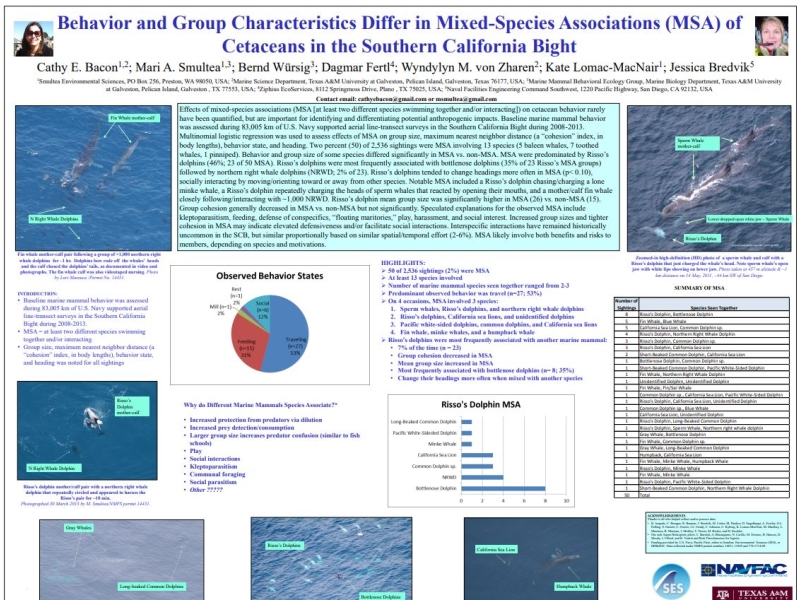
The relative occurrence of the 16 most common cetacean species in the Southern California Bight (SCB) was compared from the 1950s through 2012 by examining at-sea sighting and stranding data. While systematic survey and population abundance/density data have been available since the 1970s, prior data were collected opportunistically. Comparisons were made through a literature review and using recent results from 15 aerial surveys conducted in the SCB from 2008 through 2012. We attempted to address inconsistency in type of effort across studies by ranking the relative sighting frequency of the most common species based on the most representative study for each period. This comparison revealed changes in the relative occurrence of some species across the approximately 60-y reviewed period. Since the 1950s, common dolphins have remained the most common “species” of cetacean in the SCB. Risso’s dolphin and fin, blue, humpback, and Bryde’s whales appear to have increased in relative occurrence. The relative occurrence of the common bottlenose and northern right whale dolphins; Dall’s porpoise; and gray, killer, minke, Cuvier’s beaked, and sperm whales do not appear to have changed notably since the 1950s. There is possible indication of recent decreased relative occurrence of the Pacific white-sided dolphin. The short-finned pilot whale has decreased since the 1950s and has not been recorded in the SCB since the 1990s, concurrent with the observed relative increase in Risso’s dolphins. Overall, recent aerial surveys indicate that the 16 most commonly seen species in the SCB, in descending order of frequency, were common dolphins (two species), Risso’s dolphin, fin whale, common bottlenose dolphin, gray whale, blue whale, Pacific white-sided dolphin, humpback whale, northern right whale dolphin, common minke whale, Dall’s porpoise, killer whale, Bryde’s whale, Cuvier’s beaked whale (the latter three tied in ranking), and sperm whale. Given that the reviewed historical data from the 1950s and 1960s are virtually the only sources of information available to examine trends over the last 50 to 60 y in this area, we believe this comparative ranking approach provides useful information not available from other sources.
More details
Collapse details
Date Published:
Filesize:
- January 1, 2020
The SEFSC and Scripps Institution of Oceanography have been collaboratively deploying long-term passive acoustic monitoring stations at five Gulf of Mexico (GOM) sites since 2010 to monitor the impacts of the Deepwater Horizon oil spill and subsequent restoration activities on cetaceans (Figure 1). High-frequency Acoustic Recording Packages (HARPs), deployed at the five sites, including the De Soto Canyon (DC) HARP in the primary GOM Bryde’s whale habitat, have been continuously recording ambient noise and other acoustic events in the 10 Hz to 100 kHz frequency range, and these 8-year nearcontinuous recordings are available for analysis to better understand distribution and density trends of cetaceans, potentially including GOM Bryde’s whales. Data from the DC HARP site have only been evaluated for downsweep call sequences in the first year of data (Širović et al., 2014), and have not been evaluated for probable long-moan calls or constant tonal calls (Rice et al., 2014), which have also recently been recorded by SEFSC in the presence of GOM Bryde’s whales. Over late 2018 through 2020, this project focuses on developing automated GOM Bryde’s whale call detectors and analyzing the full 8 years of data from the DC HARP in the core habitat (Table 1), to establish complete occurrence timeseries for understanding seasonal and interannual trends and for future habitat modeling and density estimation. The 2018-19 goals were to develop the detectors and run and validate them on the first 38 months of data collected between October 2010 and July 14. They 2020 goals are to complete the validation on the detector results on the remaining data and begin a new data collection project that builds upon these results to better understand temporal variability in occurrence.
- 9,040.22 KB
More details
Collapse details
Date Published:
Filesize:
- January 1, 2021
The SEFSC and Scripps Institution of Oceanography have been collaboratively deploying long-term passive acoustic monitoring stations at five Gulf of Mexico (GOM) sites since 2010 to monitor the impacts of the Deepwater Horizon oil spill and subsequent restoration activities on cetaceans (Figure 1). High-frequency Acoustic Recording Packages (HARPs), deployed at the five sites, including the De Soto Canyon (DC) HARP in the GOM Bryde’s whale core habitat, have been continuously monitoring ambient noise and other acoustic events in the 10 Hz to 100 kHz frequency range, and 8 years of nearcontinuous recordings (2010-2018) are available for analysis to better understand distribution and density trends of cetaceans, potentially including GOM Bryde’s whales. Data from the DC HARP site had previously only been evaluated for downsweep call sequences in the first year of data (Širović et al. 2014), and had not been evaluated for probable long-moan calls or constant tonal calls (Rice et al. 2014), which have also recently been recorded by SEFSC in the presence of GOM Bryde’s whales. Over late 2018 through 2020, this project focused on developing automated GOM Bryde’s whale call detectors and analyzing the full 8 years of data from the DC HARP in the core habitat (Table 1), to establish complete occurrence time-series for understanding seasonal and interannual trends and for future habitat modeling and density estimation. The 2018-19 goals were to develop the detectors and run and validate them on the first 38 months of data collected between October 2010 and July 2014. The 2020 goals were to complete the validation of the detector results on the remaining data and to begin a new data collection project that builds upon these results to better understand temporal variability in occurrence.
- 6,853.57 KB
More details
Collapse details
Date Published:
Filesize:
- August 1, 2007
The objective of Mariana Islands Sea Turtle and Cetacean Survey (MISTCS) was to conduct the first systematic line-transect visual survey of the waters around Guam and the Northern Mariana Islands and generate density estimates for those species which had adequate data.
- 6,725.14 KB
More details
Collapse details
Date Published:
Ocean:Region:Methods:
- January 1, 2023
In spring/summer of 2018 and 2021, the Pacific Islands Fisheries Science Center Cetacean Research Program deployed drifting acoustic recorders in the U.S. Exclusive Economic Zones surrounding the Mariana Archipelago. Manual assessments revealed a low-frequency (median 473-554 Hz), short-duration (median 0.596 s), stereotypic tonal nocturnal call throughout the Mariana Archipelago. Based on time of year, spatiotemporal patterns, clear division among calls (i.e., no chorusing), comparisons with known vocalizations of whales, turtles, and fish, and presence of Bryde's whale calls, and because the call has not been detected elsewhere, we hypothesize this 500-Hz pulsed call is produced by Bryde's whales (Balaenoptera brydei).
More details
Collapse details
Date Published:
Filesize:
- September 26, 2014
The purpose of this report is to compile previously unpublished sightings of marine mammals and sea turtles made in the Mariana Islands Range Complex. The original primary goal of this report was to compile such sightings incidentally made during Navy-funded field efforts or other Navy training. However during the course of compiling these data, additional incidental sightings made by other sources were encountered.
- 1,354.66 KB
More details
Collapse details
Date Published:
Filesize:
- September 16, 2024
This project provides support for comprehensive stranding investigations in order to obtain increased baseline information about the health of marine mammals. Such support is essential when considering the Pacific Islands region (PIR) where unique geographical challenges exist. The PIR is comprised of isolated islands, spanning over 4 million square miles across the North, South and Western Pacific basins and includes the Hawai‘i Range Complex and the Mariana Islands Range Complex. All cetacean stranding response and investigative efforts for the PIR are centralized at a dedicated stranding facility located at Marine Corps Base Hawai‘i (MCBH). This specialized facility houses the University of Hawai‘i (UH) Health and Stranding Lab, which plays a critical role as the only organization in the region to conduct cause of death investigations when dolphins and whales strand. This requires mounting an immediate response to each newly reported stranding event that occurs and conducting extensive necropsy examinations, including histopathology, disease surveillance, and tissue sampling in support of numerous research efforts aimed at better understanding Hawaiian cetaceans. In addition to this project facilitating advanced diagnostics in-house at the Health and Stranding Lab, we also report on progress towards a project option to measure fecal stress and reproductive hormones in Pacific Island cetaceans. An additional project option includes characterizing marine debris ingestion by abundance and mass in previously stranded short-finned pilot whales.
- 1,446.02 KB
More details
Collapse details
Date Published:
Filesize:
- March 1, 2020
The primary goals of Winter HICEAS 2020 were to collect data required to estimate the abundance and distribution, examine the population structure, and understand the habitat of cetaceans around the main Hawaiian Islands during the winter months (January–March). There were 5 major research components to the project: visual observations for cetaceans following a line-transect survey design; passive acoustic monitoring for cetaceans using towed hydrophone arrays, sonobuoys, and autonomous drifting acoustic recorders; collection of photographs and tissue samples and deployment of satellite tags for select cetacean groups; visual observations for seabirds following a strip-transect survey design; and ecosystem measurements for assessment of cetacean and seabird habitat.
- 8,521.54 KB
Complete
Acoustic and Visual Survey for Cetaceans in Behm Canal and Southern Clarence Strait, Alaska
Project Objectives
Conduct visual line-transect surveys and passive acoustic monitoring for cetaceans, and other marine mammals, to determine species occurrence, and to estimate density within Navy’s testing range. Acoustic monitoring devices will be deployed during the vessel based survey, and long-term passive acoustic hydrophones will be monitored for year-round detection of rare and/or cryptic cetacean species.
Complete
Assessment of Marine Mammal Vocal Response to Sonar
Project Objectives
Develop analytic methods to evaluate the vocal response of odontocetes and mysticetes to sonar from navy training activities
Complete
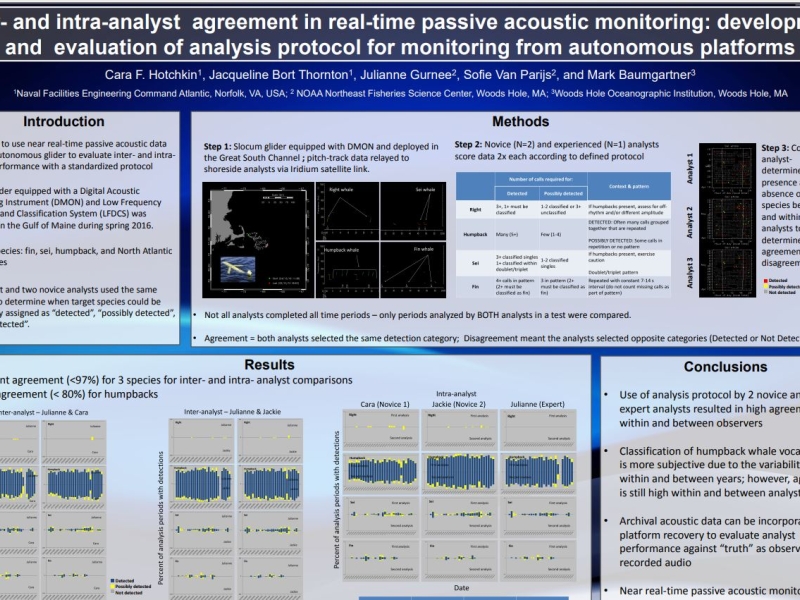
Autonomous Real-Time Passive Acoustic Monitoring of Baleen Whales for Mitigating Interactions with Naval Activities
Project Objectives
Demonstrate near real-time passive acoustic detection and classification hardware/software systems
Complete
Blue and Fin Whale Satellite Tagging
Project Objectives
Determine the movement patterns, occurrence, and residence times of blue whales and fin whales within U.S. Navy training and testing areas as well as Biologically Important Areas along the U.S. West Coast
Current
Goose-Beaked Whale and Fin Whale Population Dynamics and Impact Assessment at the Southern California Offshore Antisubmarine Warfare Range (SOAR)
Project Objectives
Improve knowledge of baseline population demographics, vital rates, and movement patterns of Cuvier’s beaked whales and fin whales. Examine what, if any, short term behavioral and/or vocal responses occur when exposed to sonar or explosions at different levels and conditions. Determine if exposure to sonar or explosives impact the long term fitness and survival of individuals or the population, species, or stock
Current
Gulf of Alaska Acoustic Moorings and Analysis
Project Objectives
Conduct systematic line transect survey for marine mammals for density estimates; conduct survey to determine ecotype identity of killer whales; analyze existing and newly collected data for seasonal occurrence, abundance, and density of cetacean
Current
Long Term Acoustic Monitoring of Marine Mammals Utilizing the Instrumented Range at Pacific Missile Range Facility (PMRF)
Project Objectives
Improve understanding of the long term trends in occurrence of marine mammals (e.g., minke, humpback, fin, Bryde's, Blainville's) on the PMRF range. Examine what, if any, acoustic and physical behavioral responses occur to Navy activities.
Current
Marine Mammal Sightings During CalCOFI Cruises
Project Objectives
Determine what species and populations of marine mammals are present in Southern California and estimate the abundance and density across seasons
Current
Mid-Atlantic Nearshore & Mid-shelf Baleen Whale Monitoring
Project Objectives
Assess occurrence, habitat use, and baseline behavior of baleen whales in the mid-Atlantic region
Current
Mid-Atlantic Offshore Cetacean Study
Project Objectives
Assess occurrence, habitat use, and baseline behavior of cetaceans in the offshore and continental shelf break region of the VACAPES OPAREA
Current
Pacific Marine Assessment Program for Protected Species (PACMAPPS) survey
Project Objectives
Identify species of beaked whales, odontocetes, and baleen whales that occur in the surveyed areas; Monitor marine mammal and sea turtle presence, distribution, and diversity in offshore waters; Develop a better understanding of marine mammal distribution, movement patterns, habitat use, population structure, and abundance; Develop reference library of visually-validated acoustic recordings of marine mammals.
Current
Passive Acoustic Monitoring for Mid-Atlantic Baleen Whales
Project Objectives
Monitor large whale occurrence in the Mid-Atlantic
Complete
Passive Acoustic Monitoring of Marine Mammals in the Gulf of Alaska
Project Objectives
Determine the spatial distribution and occurrence of beaked whales, other odontocetes, and baleen whales in offshore areas using bottom-mounted passive acoustic recorders and deep-diving autonomous gliders
Complete
Passive Acoustic Monitoring of Marine Mammals Using Autonomous Underwater Vehicles in Southern California
Project Objectives
Explore presence of marine mammals in less-surveyed, offshore areas
Complete
Passive Acoustic Monitoring of Marine Mammals Using Gliders in Marianas
Project Objectives
Identify acoustically distinct species of beaked whales, odontocetes, and baleen whales that occur in the Mariana Islands; develop a better understanding of marine mammal distribution, habitat use, and abundance
Current
Southern California Beaked Whale Occurrence (formerly "Passive Acoustic Monitoring of Marine Mammals in Southern California Range Complex (SOCAL)")
Project Objectives
Determine the distribution and temporal patterns of beaked whale occurrence in the waters within and outside the Southern California Range Complex (SOCAL). Use passive acoustic monitoring to determine what species are present in SOCAL and examine spatial and temporal patterns.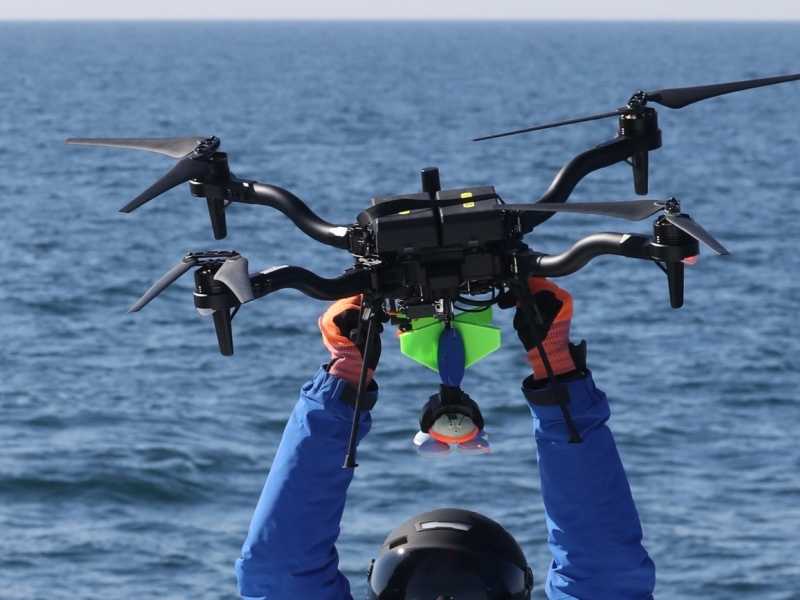
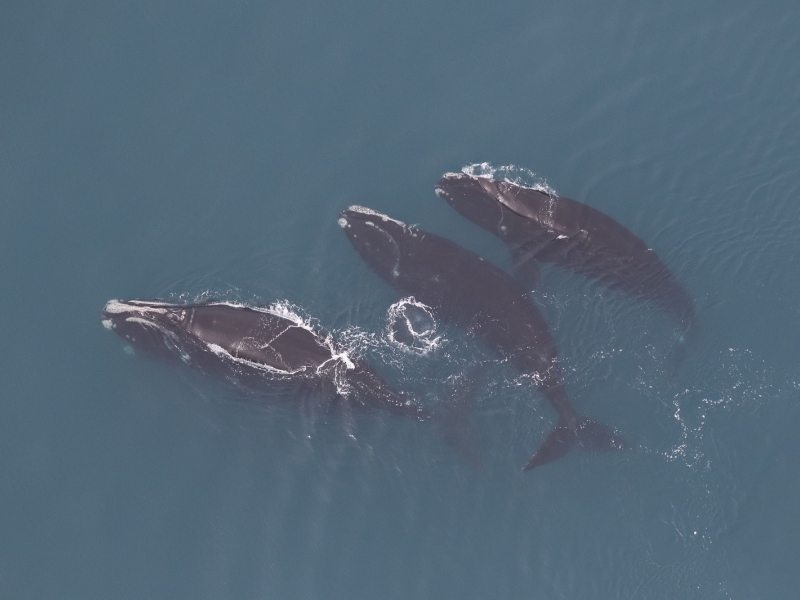
2024-2025 Large Whale Season Summary
March 24, 2025
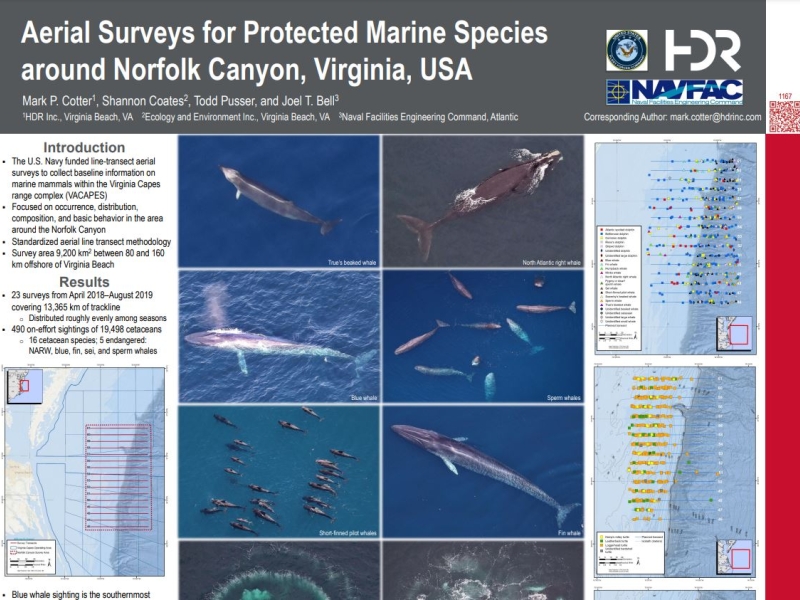
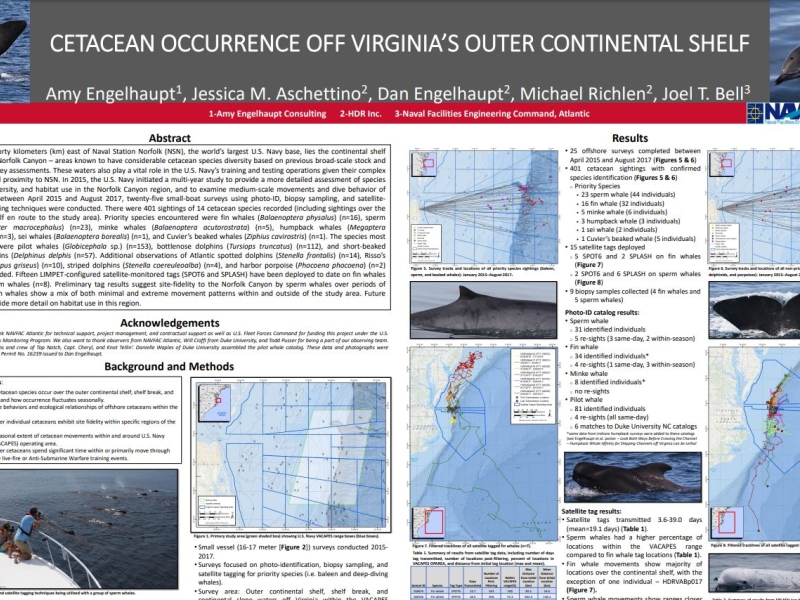
We have two separate efforts focusing on cetaceans off the coast of Virginia. The first is our Offshore (Outer Continental Shelf) Cetacean Study, which focuses primarily on deep diving odontocetes like sperm whales. The second effort is our Nearshore and Mid-Shelf Baleen Whale Monitoring Project.
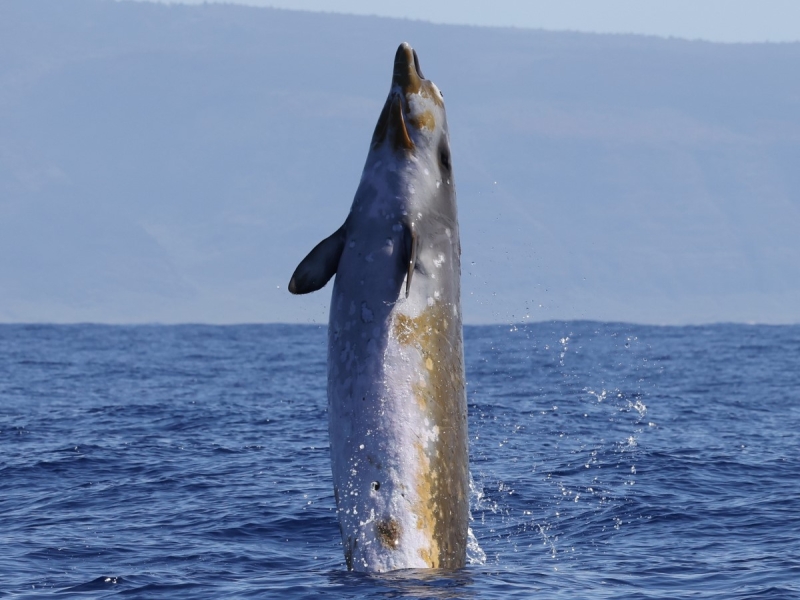
Kaua'i Field Work Updates
February 20, 2025
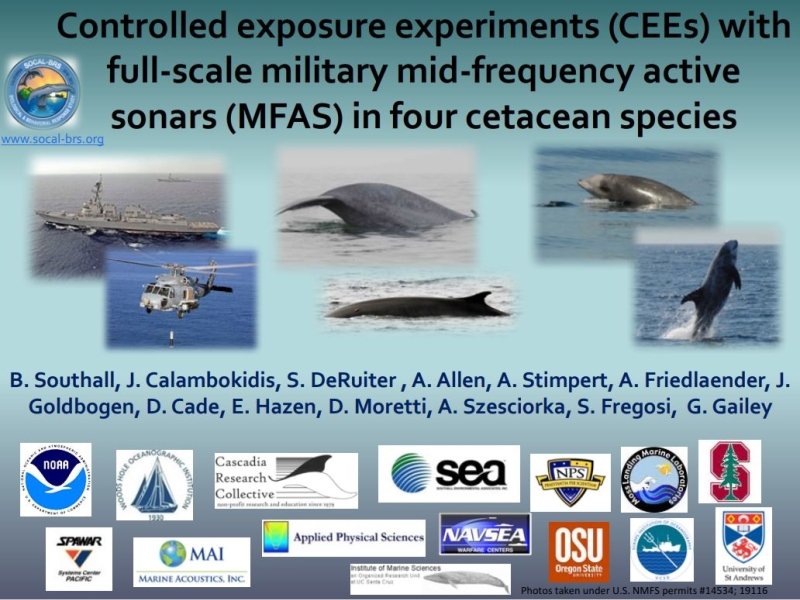
Scientists from Cascadia Research Collective recently completed a ~9-day field project off Kaua’i that started on February 9th. This project is timed to occur prior to a Submarine Command Course (SCC) training event. The primary goal is to deploy satellite telemetry tags on multiple species of odontocete cetaceans prior to the SCC, to be able to examine their behavior before, during, and after the event. This approach has been very successful in the past as a way of examining how different species respond to Navy training activities including mid-frequency active sonar (MFAS). Click through the picture below to see daily updates.
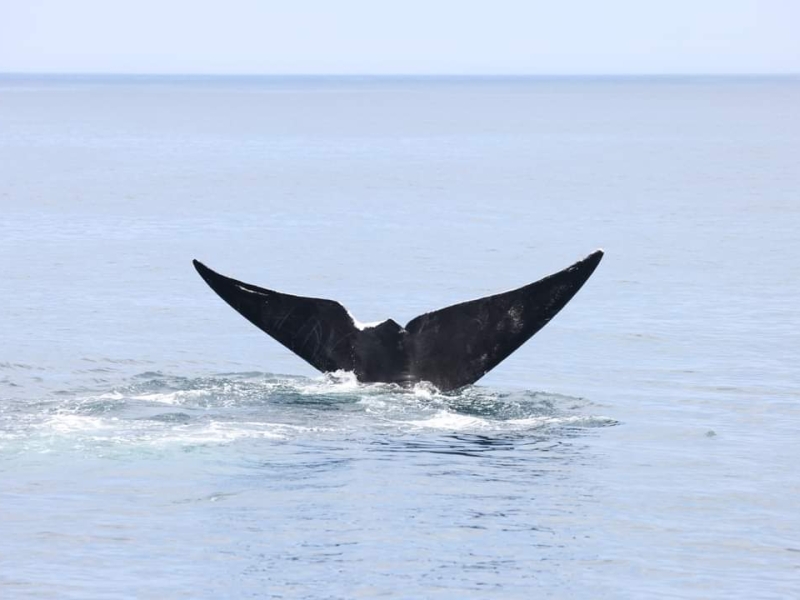
Whales of Summer
June 10, 2024
In the mid-Atlantic, baleen whale sightings typically occur during the colder months, with peak activity in December and January. Sightings of humpback and right whales usually decrease by late March through April. While occasional baleen whale sightings, particularly of fin whales, happen during warmer months, large groups are uncommon as summer approaches. Pelagic surveys during this time often focus on odontocetes like sperm whales and beaked whales.
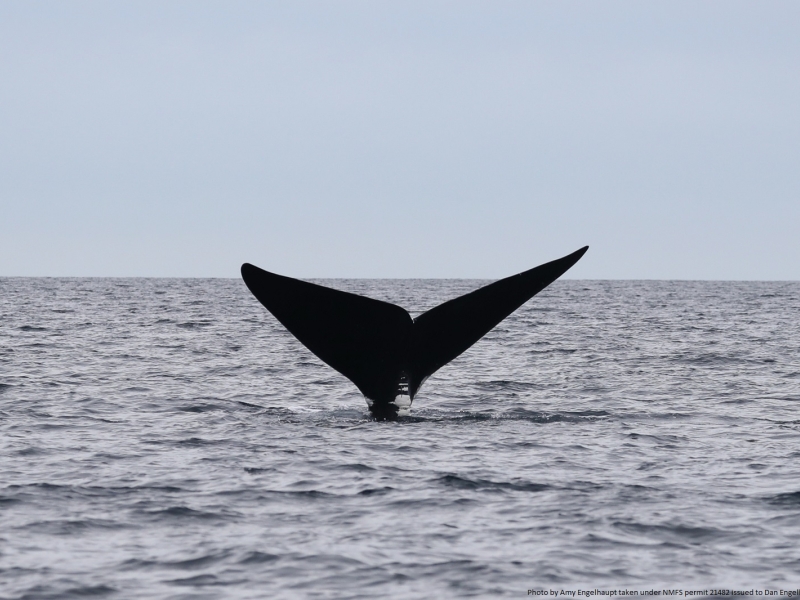
Large Whale Action in the Mid-Atlantic
January 30, 2024
After a relatively slow start to the 2023-2024 large whale season, things are picking up here in the Mid-Atlantic. Last week was the busiest we’ve had so far this season for several of our projects as well as adjacent colleagues.
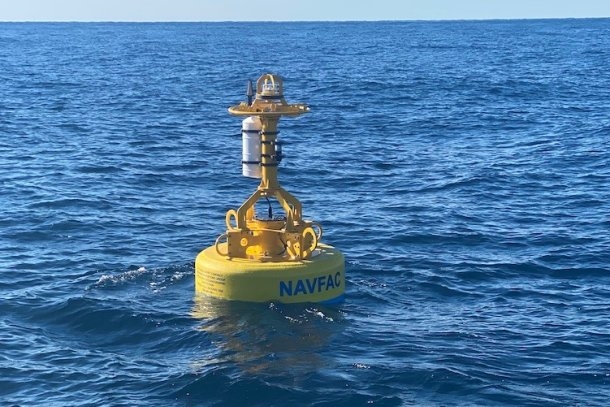
New acoustic monitoring buoy helps researchers study and protect North Atlantic Right Whales
January 19, 2021
A new buoy to listen for protected whales.
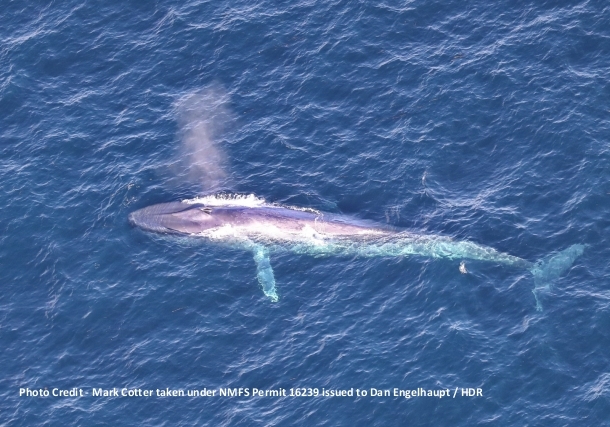
Fin and blue whale feeding aggregation observed in Norfolk Canyon study area
March 26, 2019
Baleen whale feeding assemblage offshore of Virginia.
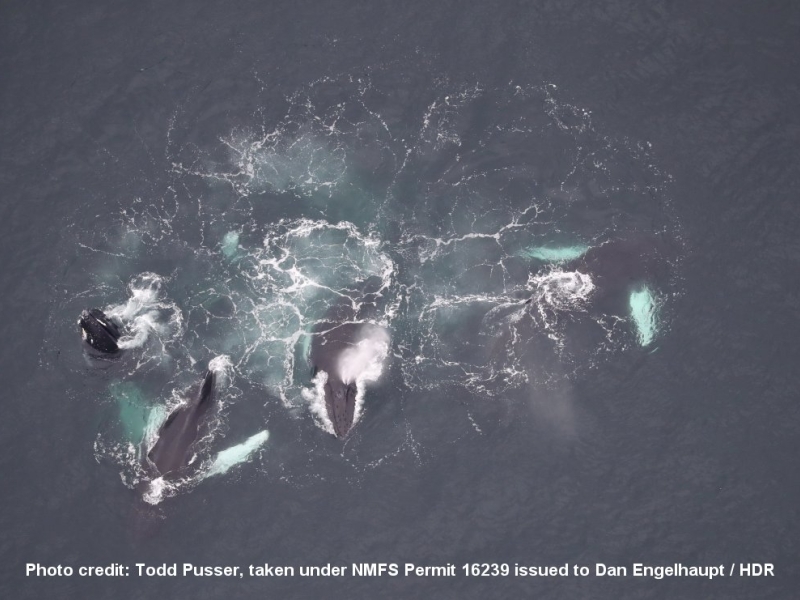
Blue whales and sei whales and right whales - OH MY!!!
April 18, 2018
A spring aggregation of endangered whales offshore.
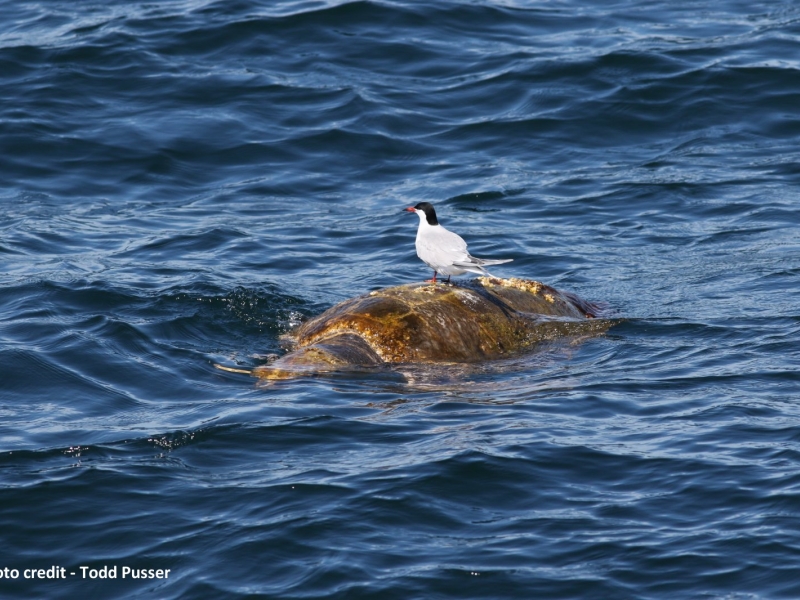
Great Day for a Mid-Atlantic Offshore Survey
April 20, 2015
Pelagic cetaceans and sea turtle sightings.
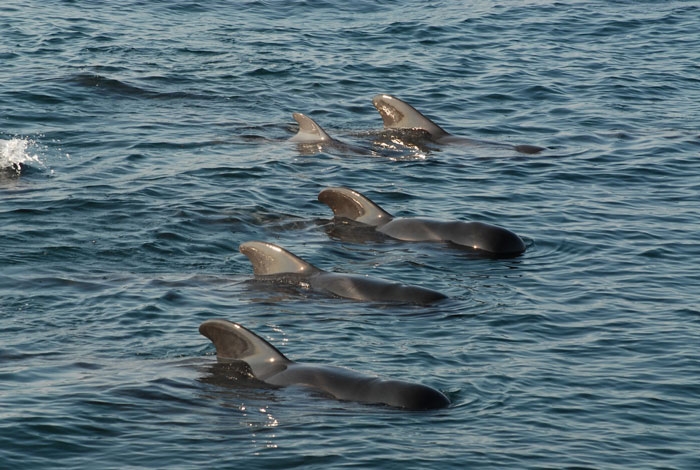
Cape Hatteras Field Work Update
October 28, 2013
Calm days at sea off NC.
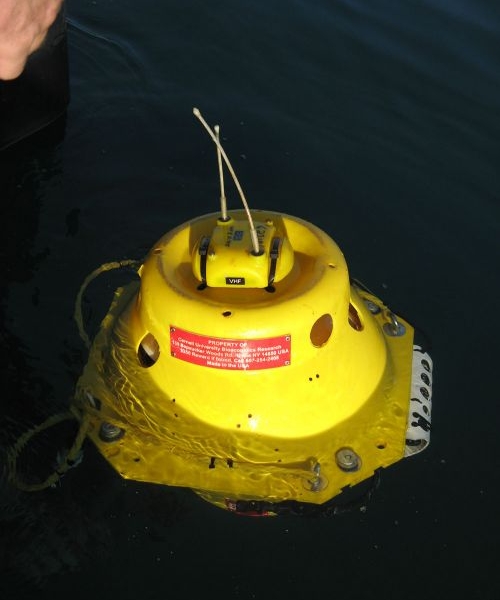
Passive acoustic monitoring for right whales off Cape Hatteras
October 21, 2013
MARUs off NC